



one,HongkongVisiting the sick and giving giftsMarket Overview
Visiting the sick and giving gifts is an important custom in Hong Kong society since ancient times, rooted in the Chinese culture's emphasis on "etiquette" and the tradition of caring for the sick. Whether it is family, close friends, colleagues, or business partners, once someone is hospitalized or recovering at home, visiting them with gifts is not only a concrete act of affection but also an indispensable part of social etiquette.
To understand the scale of the market for gift-giving during illness visits, it's essential to first understand the reality of inpatient healthcare in Hong Kong. According to publicly available data from the Hong Kong Hospital Authority (HA), the Hong Kong public hospital system provides a vast inpatient service. As of recent statistics, the HA's public hospitals and institutions have over 28,000 beds, while all public and private hospitals in Hong Kong combined have over 33,000 beds, effectively serving over 7.5 million citizens.
Regarding hospitalized patients,Hong Kong public hospitals handle over 1.8 million inpatient and day-hospital discharges annually.It is quite large in scale.
Analyzing by disease category, urogenital diseases, tumors, digestive system diseases, respiratory system diseases, and circulatory system diseases have consistently been the five categories with the highest number of hospitalizations, accounting for more than half of all hospitalizations. These disease categories share the common characteristic of often requiring a relatively long period of hospitalization or recovery, providing a natural window for visiting the sick and giving gifts.
In addition to public hospitals, Hong Kong has 13 private hospitals (as of recent years) providing more than 5,000 beds and admitting over 270,000 inpatients annually. Private hospitals, due to their more spacious environments and more flexible visiting policies, are often the most popular destinations for hospital visit gifts.
It is worth noting that with the continued aging of Hong Kong's population, the demand for hospitalization services is expected to increase further. According to population projections from the Census and Statistics Department, the proportion of people aged 65 and above will continue to rise, and the hospitalization rate among the elderly is far higher than that of the younger population. This means that the demand for hospital visits and gift-giving will grow in tandem with the aging population, indicating a positive long-term market outlook.
二A panoramic view of Shanglifang's hospital visit order data in 2025
Give Gift Boutique (Give Gift Boutique,www.givegift.com.hk)Established in 2008, it is one of Hong Kong's leading gift and florist shops, holding a market-leading position in various gift-giving scenarios such as visiting the sick, openings, birthdays, and festivals. It has been selected as one of the "Top Three Florists in Hong Kong" by Apple Daily and has frequently been featured in mainstream media outlets such as Weekend Weekly, Eastweek, TVB, and ATV. Its platform currently offers over 2,000 products, providing gift-giving services throughout Hong Kong and even worldwide.
The data on Shanglifang's 2025 hospital visit orders cited in this report comes from its 2025 sample order database, covering multiple dimensions such as product name, delivery address type (residential/office/hospital/clinic, etc.), gift giver's gender, greeting card content, product category, delivery area, and interval between order placement and shipment.
(a) The overall volume of hospital visit orders
In terms of order scenario distribution, visiting patients ranks first among Shanglifang's many scenarios.八It ranks after Mid-Autumn Festival, New Year, birthday, business opening, Christmas, thanksgiving, and funerals. Because visiting the sick is different from life cycle events (such as birthdays and births) or festival customs, its demand is "random" rather than "festival-specific," yet it can maintain a stable order volume year after year, reflecting the true depth of market demand.
(二Gender Analysis: Women Dominate the Market for Gifts Given During Hospital Visits
Among the orderers whose gender can be identified, there were far more female orderers than male orderers, and this trend has continued to strengthen over the past three years:
| gender | Percentage in 2023 | Percentage in 2024 | Percentage in 2025 | Three-year trend |
| female | 65.44% | 67.61% | 73.25% | ↑ Continue to rise |
| male | 24.85% | 23.01% | 26.75% | ↕ Slight fluctuations |
※ Data source: Shanglifang 2025 Annual ReportsamplingOrder database.
The finding that women play a dominant role in visiting the sick and giving gifts aligns with sociological research findings in Hong Kong and throughout East Asia. Women generally invest more in maintaining interpersonal relationships and expressing emotions, and are more proactive in "caring" social behaviors such as visiting the sick.
It is worth noting that even in corporate/business hospital visit orders, the proportion of orders placed in women's names or purchased by female employees remains high, reflecting the common phenomenon that women in the workplace assume more responsibility in "relationship-based work" (such as purchasing gifts for hospitality).
| Customer Service Notes
The Shanglifang customer service team observed that the vast majority of customers who called or inquired about hospital visit gifts were women. Common questions included: "My friend is hospitalized, what should I send?", "Are there any gifts suitable for the elderly?", and "I don't know what they like to eat, are there any safer options?" Behind these questions is the high importance that female customers place on the "appropriateness of the gift"—they would rather spend more time researching than let the gift appear hasty. |
▶ Browse over 80 hospital visit gift options from Shanglifang now, with professional consultants available to answer your gift selection questions instantly:www.givegift.com.hk/get-well-gift - visiting the sick and giving gifts
(三Top-ranked products for visiting patients
In terms of product category, fresh fruit baskets, with an order share of 47.601 TP15T, remain the top choice for visiting the sick, far exceeding other categories. This figure confirms the deep-rooted custom of "sending fruit baskets to visit the sick" in Hong Kong – fruits symbolize health and vitality, are colorful and pleasing to the eye, and are practical and non-wasteful, making both the giver and the receiver feel natural and appropriate.
Top-selling items
|
Ranking |
product |
Core advantages |
|
|
First |
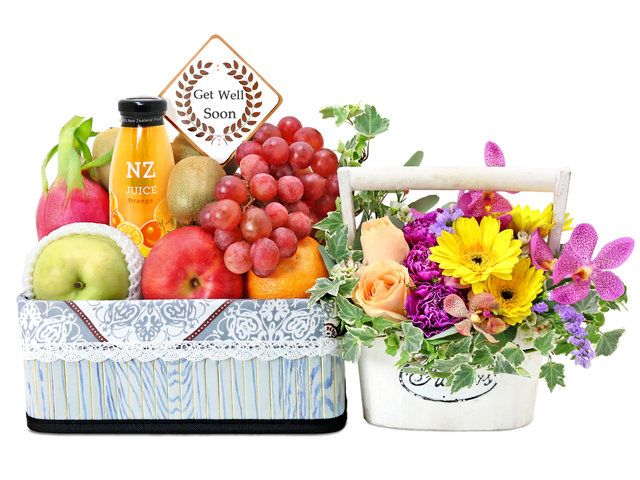 |
Visiting the sick and offering condolences, fruit and small flower basket combination G5 |
Fruit and floral arrangements convey double the sentiment |
|
second |
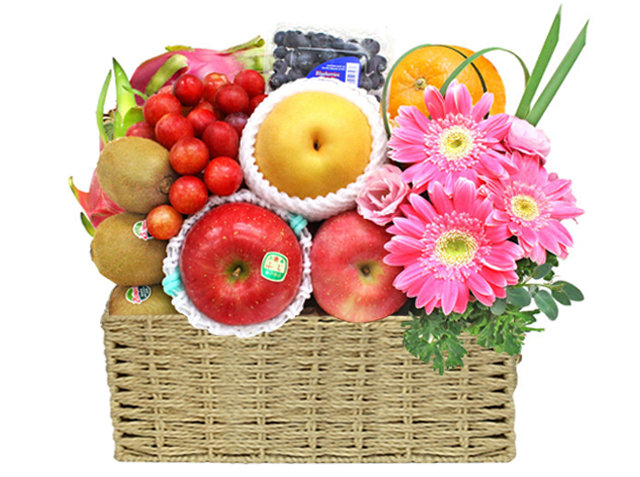 |
Visiting the sick and offering condolences G7 |
A variety of combinations, with a generous portion size. |
|
third |
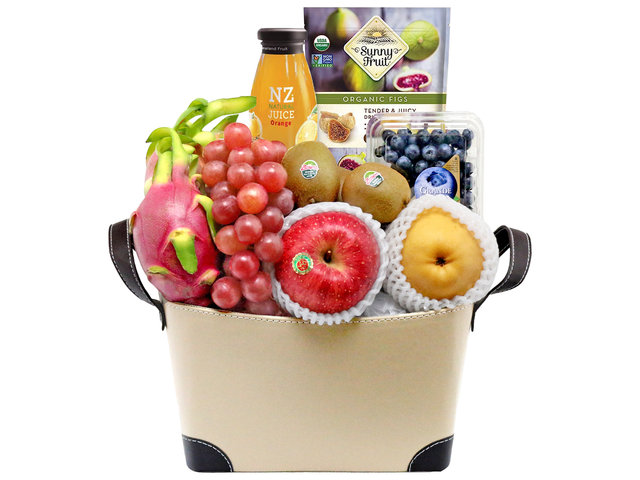 |
Leisure, health, and gift-giving fruit basket G15 |
Affordable price, simple and practical |
The firsthand observations of customer service provide a vivid interpretation of this ranking. G5, ranked number one, stands out precisely because it combines fresh fruit with floral arrangements, offering two sentiments in one gift. It allows the recipient to receive both nourishing fruit and comforting flowers at their bedside, achieving the perfect balance between practicality and thoughtfulness. "Many people find a single fruit basket a bit monotonous, but a fruit and flower basket is abundant, tasteful, and reasonably priced—almost a foolproof choice," a customer service representative stated.
However, the choice of product is largely constrained by a regulation that may not be widely known: all public hospitals in Hong Kong completely prohibit bringing fresh flowers inside, as the fragrance may affect the health of patients and nearby inpatients. This means that once delivered to a public hospital, flower-included packages are completely useless. Customer service revealed that in such cases, they proactively recommend pure fruit baskets (such as G6) without flowers to avoid embarrassment for customers due to lack of knowledge.
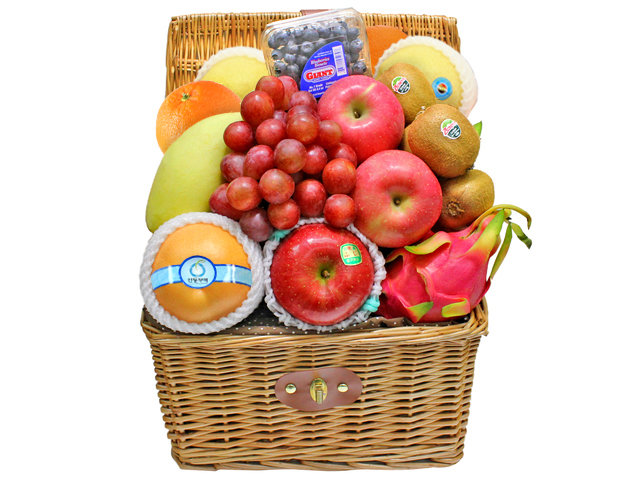
[Sick Visit Fruit Basket G6]
It's worth adding that even with fruit itself, there's an art to choosing the right fruit for a hospital visit. "It's inconvenient for patients to share fruit in a hospital, so varieties that are easy to share are especially popular," the customer service representative explained. "Grapes are the most common example—each seed is separate, clean, and convenient, making them particularly suitable for a hospital ward environment. On the other hand, melons spoil easily after being cut and are difficult to share, so we generally don't recommend including them."
If you're unsure where to start, choosing a fruit basket paired with a small floral arrangement (such as G5) is almost a foolproof option; if you're sure you're sending it to a public hospital, opt for a plain fruit basket or a beverage gift basket instead.
Shanglifang's Top 30 Best-Selling Hospital Visit Gifts of 2025
|
Ranking |
product | Product Type | Sales share |
|
1 |
Visiting the sick and offering condolences, fruit and small flower basket combination G5 | Fruit and flower basket combination | 6.27% |
| 2 |
Visiting the sick and offering condolences G7 |
Fruit and flower basket combination |
5.52% |
|
3 |
Leisure, health, and gift-giving fruit basket G15 | fruit basket | 4.58% |
|
4 |
Economical and high-quality fruit basket for visiting the sick G2 | fruit basket | 4.41% |
|
5 |
Fruit Basket for Visiting the Sick G6 | fruit basket | 3.96% |
|
6 |
Business Fruit Basket (8) | Business Fruit Basket |
3.79% |
| 7 | Business Traditional Fresh Fruit Basket (12) | Business Fruit Basket |
3.22% |
| 8 | Fresh fruit basket with floral arrangement Z11 as a gift | Fruit and flower basket combination |
2.84% |
| 9 | Affordable Fresh Fruit Basket A6 | fruit basket |
2.35% |
| 10 | Affordable Fruit Basket (4) | fruit basket |
2.35% |
|
11 |
Fruit basket for a speedy recovery 1 | fruit basket | 2.31% |
|
12 |
Rehabilitation Fresh Fruit Basket with Small Flower Basket (8 items) |
Fruit and flower basket combination | 2.14% |
|
13 |
Fruit basket for visiting the sick and offering condolences to those recovering from illness G38 |
fruit basket | 2.02% |
|
14 |
Business Fruit Basket (15) |
Business Fruit Basket | 1.90% |
| 15 |
Visiting the sick and offering condolences, fruit and food gift baskets, and small flower baskets G1 |
Fruit and flower basket combination |
1.85% |
| 16 |
Fresh Fruit Basket for Business Gifts FB1 |
fruit basket |
1.85% |
| 17 |
Economical and generous fresh fruit gift basket L |
fruit basket |
1.69% |
| 18 | G17 Hospital Visit and Condolence Basket | Fruit and flower basket combination |
1.65% |
|
19 |
Fresh fruit basket (C) | fruit basket | 1.40% |
|
20 |
Health and wellness fruit gift basket 11 | Health Gift Basket | 1.32% |
|
21 |
A fresh fruit basket with balloons and a small flower basket (2 items) for rehabilitation. | Fruit and flower basket combination | 1.28% |
| 22 | 20 flower baskets for visiting the sick | Flowers and Gifts |
1.15% |
| 23 | Premium Fruit and Vegetable Gift Basket for Visiting the Sick and Promoting Health (with floral design) 6 | Fruit and flower basket combination |
1.11% |
| 24 | 6-inch recovery balloon | Decorations |
1.07% |
|
25 |
Florist's Elegant Hydrangea K01 | Flowers and Gifts | 0.99% |
|
26 |
Health Care Gift Hamper RH05 | Health Gift Basket | 0.95% |
|
27 |
Business Fruit Basket (10) | fruit basket |
0.91% |
| 28 | Gift basket of fresh fruit with small flower basket G28 | Fruit and flower basket combination |
0.91% |
| 29 | Abundant Fresh Fruit Gift Basket 1015B1 | fruit basket |
0.87% |
| 30 | Premium Gift Gourmet Fresh Fruit Basket G24 | Health Gift Basket |
0.82% |
※ Data source: Shanglifang 2025 Annual ReportsamplingOrder database.
Looking at the composition of the Top 30 products, several distinct patterns can be observed:
- Fruit baskets and fruit flower baskets dominate the market. More than half of the top 10 products fall into this category, demonstrating that "giving fresh fruit" as the preferred gift for visiting the sick has become deeply ingrained in Hong Kong society.
- The demand for "fruit + flowers" gift sets is strong. Many "fruit and flower basket sets" made it into the Top 30, reflecting consumers' desire to strike a balance between practicality (fruit) and aesthetics (flowers) when giving gifts.
- Health and wellness gift baskets have secured a place in the top 30. Several health and wellness gift basket products made it into the top 30, indicating that some consumers prefer gifts with a clear "health and wellness" focus, especially suitable for those with chronic illnesses or those recovering from surgery.
- The demand for fruit baskets for business purposes cannot be ignored. The fact that multiple products in the "Business Fruit Basket" series are on the list indicates that corporate gifts (for visiting hospitalized clients or employees) are an important part of the hospital visit gift market, while products with a business-style design also attract other customers.
(四Product Category Distribution Analysis
Analyzing patient visit orders by broad categories rather than individual products provides a clearer picture of their product distribution. The breakdown of major categories is as follows:
|
Product Categories |
Estimated percentage |
|
fruit basket |
47.60% |
|
Fresh flowers and floral gifts |
17.98% |
|
Fruit and flower basket combination |
12.51% |
| Health Gift Basket |
8.91% |
| Food Gift Hamper |
8.24% |
| other |
4.71% |
※ Data source: Shanglifang 2025 Annual ReportsamplingOrder database.
Fruit baskets led the pack with the highest sales volume, demonstrating Hong Kong consumers' strong preference for traditional hospital visit gifts. "Fruit and flower basket sets" also sold very well, especially among consumers who appreciate both practicality and aesthetics.
(五Delivery Area Analysis:Hong Kong Island and Kowloon account for nearly 60%
Based on the delivery area data of Shanglifang's hospital visit orders in 2025, the distribution across Hong Kong's 18 districts (and Macau) is as follows:
|
Ranking |
area | percentage | Geographical Plates |
|
1 |
Central and Western District | 10.10% | Hong Kong Island |
|
2 |
Sha Tin | 10.06% |
New Territories |
| 3 | Wan Chai | 9.77% |
Hong Kong Island |
| 4 | Kowloon City | 8.74% |
Kowloon |
|
5 |
Yau Tsim Mong | 7.45% | Kowloon |
|
6 |
Saigon | 6.50% | New Territories |
|
7 |
Kwun Tong | 6.42% |
Kowloon |
| 8 | South District | 5.30% |
Hong Kong Island |
| 9 | Tuen Mun | 5.13% |
New Territories |
|
10 |
Yuen Long | 4.80% | New Territories |
|
11 |
Sham Shui Po | 4.80% | Kowloon |
|
12 |
East District | 3.89% | Hong Kong Island |
|
13 |
Kwai Tsing | 3.73% |
New Territories |
| 14 | Tsuen Wan | 3.27% |
New Territories |
| 15 | North District | 2.98% |
New Territories |
| 16 | outlying islands | 2.69% |
New Territories |
|
17 |
Tai Po | 2.24% | New Territories |
|
18 |
Wong Tai Sin | 1.99% | Kowloon |
| — | Macao | 0.12% |
Macao |
| — | total | 100.00% |
— |
※ Data source: Shanglifang 2025 Annual ReportsamplingOrder database.
The top five districts (Central and Western District, Sha Tin, Wan Chai, Kowloon City, and Yau Tsim Mong) accounted for 46.12%, meaning that nearly half of the hospital visit orders were concentrated in these five areas, reflecting the high correlation between the demand for hospital visit gifts and three major factors: distribution of medical resources, population density, and consumption capacity.
Analysis from the perspective of geographical tectonic plates:
| Geographical Plates | Coverage area | Total percentage | Core driving factors |
| Hong Kong Island | Central and Western District, Wan Chai, Southern District, Eastern District | 29.07% | High hospital density, concentration of private hospitals, and strong consumer spending power. |
| Kowloon | Kowloon City, Yau Tsim Mong, Kwun Tong, Sham Shui Po, Wong Tai Sin | 29.40% | Densely populated areas where public hospitals are mainly concentrated |
| New Territories | Sha Tin, Sai Kung, Tuen Mun, Yuen Long, Kwai Tsing, Tsuen Wan, North District, Islands, Tai Po | 41.41% | Sha Tin has the largest population base and makes the highest contribution. |
| Macao | Macao | 0.12% | Small cross-border orders |
※ Data source: Shanglifang 2025 Annual ReportsamplingOrder database.
The New Territories led the three major areas with a combined share of 41.411 TP15T, primarily driven by the large resident population base of densely populated areas such as Sha Tin, Sai Kung, and Tuen Mun. Hong Kong Island (29.071 TP15T) and Kowloon (29.401 TP15T) were nearly equal, each accounting for approximately 30%. It is worth noting that...Wong Tai Sin District (1.99%) has the lowest percentage among all districts in Kowloon.On the one hand, the population of Wong Tai Sin is relatively concentrated in public housing and lower-middle-class communities, so the penetration rate of online gift ordering may be low; on the other hand, it may also reflect that the medical institutions in Wong Tai Sin District have relatively limited appeal in the scenario of direct delivery for visiting patients.
| Regional Insight: Density of Medical Institutions is the Core Driver of Gift-Giving During Hospital Visits
The top three districts (Central and Western District, Sha Tin, and Wan Chai) all boast Hong Kong's most important clusters of medical institutions—Central and Western District has Queen Mary Hospital and numerous private hospitals; Sha Tin has Prince of Wales Hospital; and Wan Chai has Ruttonjee Hospital and Hong Kong Sanatorium & Hospital. This pattern clearly illustrates that the geographical location of hospitals is the strongest driver of direct delivery orders for hospital visit gifts, while residential population density dominates home delivery orders during the post-discharge home recovery period. |
▶ Shanglifang offers same-day/next-day delivery to all 18 districts in Hong Kong, including outlying islands:www.givegift.com.hk/delivery
(vi) Delivery location analysis: More than half were delivered to residences.
The types of delivery addresses for gifts received during hospital visits reveal a phenomenon that surprised some people:
|
Delivery location |
percentage | Interpretation |
|
Residential |
50.86% (over 50%) | Patients recover at home or return home to recuperate after surgery |
|
Hospitals/Clinics |
24.51% |
Directly delivered to the inpatient ward |
| office | 18.56% |
Have a colleague/supervisor/subordinate pass it on. Or as a greeting to employees or customers upon returning to work. |
| Other (shops / industrial buildings, etc.) | 6.07% |
Other special circumstances, etc. |
※ Data source: Shanglifang 2025 Annual ReportsamplingOrder database.
Residential properties accounted for the largest share (approximately 50%), reflecting a key characteristic of Hong Kong's healthcare system: long waiting times for hospital admissions in public hospitals and relatively short average lengths of stay. Many patients are discharged home after acute treatment, and the true "long recovery period" is often spent at home. Therefore, delivering hospital visit gifts to patients' homes not only meets practical needs but also allows patients to feel the care from family and friends at home. "Some large companies have employee care budgets, arranging visits during employee hospitalizations, but gifts are often only delivered to homes after discharge," a customer service representative stated. "These orders are all counted as residential, which is one of the important reasons for the higher residential figures."
Orders delivered directly to hospitals/clinics accounted for about a quarter, concentrated in the early stages of hospitalization or when patients were still receiving treatment in the hospital. It is worth noting that all public hospitals in Hong Kong (including Queen Mary Hospital, Queen Elizabeth Hospital, Prince of Wales Hospital, etc.) completely prohibit bringing flowers inside, because pollen and odors may have adverse effects on patients with weakened immune systems, asthma patients, and patients receiving respiratory treatment. Customers who wish to send flowers often have to wait until the patient is discharged from the hospital before having them delivered to their home, ensuring the sentiment behind the bouquet is fully expressed.
The proportion of gifts sent to the office (approximately 20%) is also noteworthy, reflecting the workplace culture of "gift-giving by colleagues." Many people, due to time constraints or distance limitations when visiting a client in the hospital, choose to send gifts to the office first, and then have a colleague or secretary deliver them. On the other hand, after a client recovers and returns to work, a surprise gift delivered to the office expresses a "welcome back, take care" sentiment, often making the recipient feel very warm. Gift-giving during hospital visits is not limited by hospital visit time; delivering gifts to the home after discharge is equally thoughtful, and even more so. Companies also consider arranging for gifts to be delivered to the office after a client's recovery to maintain relationships.
1. Gift-giving structures between private and public hospitals
| category | Percentage of medical institutions delivered | main reason |
| Private Hospital | 66.41% | Flexible visiting policies, spacious wards, and high acceptance of direct transport. |
| public hospitals | 33.59% | Visiting hours are restricted, and some wards limit the acceptance of gifts. |
※ Data source: Shanglifang 2025 sample order database.
Private hospitals overwhelmingly dominate direct-delivery orders to medical institutions (66.411 TP15T) for several reasons: First, private hospital wards are typically more spacious, often single or double rooms, providing more space and a greater willingness to receive gifts; second, visiting hours at private hospitals are generally more flexible than at public hospitals, making gift delivery to wards smoother; and third, patients and their families choosing private hospitals generally have stronger purchasing power and are more likely to order gifts online for direct delivery. On the public hospital side, some wards (especially intensive care units and isolation wards) have strict restrictions on flowers and outside food, which to some extent reduces the volume of direct-delivery orders from public hospitals.
2. Top 36 medical institutions' visitor gift orders
|
Ranking |
Hospitals/Clinics | category | Medical institution orders | Accounting for all hospital visit orders |
|
1 |
Hong Kong Sanatorium & Hospital | private | 18.40% | 4.89% |
|
2 |
Hong Kong Gleneagles Hospital | private | 9.82% | 2.61% |
| 3 | St. Teresa's Hospital | private | 9.66% |
2.57% |
| 4 | Baptist Hospital | private |
9.05% |
2.41% |
|
5 |
St. Paul's Hospital | private | 6.29% | 1.67% |
|
6 |
Ren'an Hospital | private | 5.67% | 1.51% |
| 7 | Mary Hospital | public | 4.60% |
1.22% |
|
8 |
The Chinese University Hospital of Hong Kong | private | 3.99% | 1.06% |
| 9 | Prince of Wales Hospital | public | 3.07% |
0.82% |
| 10 | Canossa Hospital | private | 3.07% |
0.82% |
|
11 |
Princess Margaret Hospital | public | 2.76% | 0.73% |
|
12 |
Hong Kong Adventist Hospital (Stubbs Road) | private | 2.61% | 0.69% |
| 13 | Queen Elizabeth Hospital | public | 2.15% |
0.57% |
|
14 |
East District Padmas Nethersole Hospital | public | 1.99% | 0.53% |
|
15 |
Tseung Kwan O Hospital | public | 1.84% |
0.49% |
| 15 | United Christian Hospital | public | 1.84% |
0.49% |
|
17 |
Kwong Wah Hospital | public | 1.69% | 0.45% |
| 18 | Caritas Medical Centre | public | 1.23% |
0.33% |
|
18 |
Tsuen Wan Adventist Hospital | private | 1.23% | 0.33% |
| 20 | North District Hospital | public | 1.07% |
0.29% |
|
21 |
Renji Hospital | public | 0.92% | 0.24% |
| 21 | Tai Po Nethersole Hospital | public | 0.92% |
0.24% |
|
21 |
Ruttonjee Hospital | public | 0.92% | 0.24% |
| 21 | Tuen Mun Hospital | public | 0.92% |
0.24% |
|
25 |
Boai Hospital | public | 0.77% | 0.20% |
| 26 | Kowloon Hospital | public | 0.61% |
0.16% |
|
26 |
Mingde Hospital | private | 0.61% | 0.16% |
| 28 | Ling Shi Hospital | public | 0.46% |
0.12% |
|
29 |
Wong Tai Sin Hospital | public | 0.31% | 0.08% |
| 29 | Donghua East Campus | public | 0.31% |
0.08% |
|
29 |
Ge Lianghong Hospital | public | 0.31% | 0.08% |
| 29 | Donghua Hospital | public | 0.31% |
0.08% |
|
33 |
Tung Wah Group of Hospitals Fung Yiu King Hospital | public | 0.15% | 0.04% |
| 33 | Evangel Hospital | public | 0.15% |
0.04% |
|
33 |
MacLehose Rehabilitation Centre | public | 0.15% | 0.04% |
| 33 | Sha Tin Hospital | public | 0.15% |
0.04% |
|
— |
total | — | 100.00% | 26.59% |
* Data source: Shanglifang 2025 sample order database. Those with the same ranking are arranged by stroke count.
3. Key Insights
Insight 1: Hong Kong Sanatorium & Hospital stands out from the crowd, with a market share far exceeding that of the second-place hospital.Hong Kong Sanatorium & Hospital topped the list with a market share of 18.401 TP15T, nearly doubling the order volume of the second-ranked Gleneagles Hospital, fully reflecting its market position as a leading private hospital in Hong Kong. Hong Kong Sanatorium & Hospital is renowned for its high-end specialties such as cardiology, oncology, and orthopedics. Its inpatients are predominantly middle- to high-income groups, whose relatives and friends show significantly higher awareness of online ordering and budgets for hospital visit gifts compared to the average person.
Insight 2: The top six are all private hospitals, accounting for 59.13% of direct medical institution orders.The top six hospitals are all private hospitals (Hong Kong Sanatorium & Hospital, Horizons Hospital, St. Teresa's Hospital, Baptist Hospital, St. Paul's Hospital, and Union Hospital), accounting for a total of 59.131 TP15T of direct delivery orders from medical institutions, making them the absolute main force in the direct delivery scenario for hospital visit gifts. These six hospitals are distributed in major areas of Hong Kong (Hong Kong Island West, Wong Chuk Hang, Kowloon City, Mong Kok, Causeway Bay, and Tai Wai), with wide geographical coverage, which also reflects the regional balance of demand for hospital visit gifts from private hospitals.
Insight 3: Among public hospitals, Queen Mary Hospital, Prince of Wales Hospital and Princess Margaret Hospital are leading the pack.Among public hospitals, Queen Mary Hospital (4.601 TP15T), Prince of Wales Hospital (3.071 TP15T), and Princess Margaret Hospital (2.761 TP15T) ranked as the top three, befitting their status as the largest public hospitals in Hong Kong. These three hospitals collectively accounted for 31.051 TP15T of direct orders from public hospitals and 10.431 TP15T of direct orders from all medical institutions.
| The underlying logic of private hospitals
Private hospitals accounted for 66.411 TP15T of direct-to-medical-service orders. Besides visiting policies and space factors, a key factor was the "matching degree of consumption habits" among patient groups. Patients choosing private hospitals generally have friends and family members with stronger online shopping habits and a higher willingness to spend on gifts. This resulted in online gift platforms like Shanglifang having a much higher penetration rate in private hospitals than in public hospitals. In other words, the delivery location of hospital visit gifts not only reflects "who is in the hospital," but also "whose friends and family are accustomed to sending gifts online." |
4. The correlation between the geographical distribution of hospitals and regional order data
Based on the data from the delivery area analysis in Chapter (V), the hospital's geographical location closely correlates with the order share of its region:
- Central and Western District (accounting for 10% of all orders, ranking first in Hong Kong):The surge was primarily driven by direct orders from Queen Mary Hospital (public) and Canossa Hospital (private), coupled with a large number of residential discharge rehabilitation orders in the Central and Western District.
- Wan Chai (77%, third in Hong Kong):The combined influence of Ruttonjee Hospital (public) and Hong Kong Sanatorium & Hospital (private, Happy Valley is part of Wan Chai District) has made Wan Chai one of the areas with the highest density of hospital visit gifts in Hong Kong.
- Kowloon City (74%, fourth in Hong Kong):St. Teresa's Hospital (private, 327 Prince Edward Road West) is the most important destination for direct hospital visits in Kowloon City and ranks third on the list, significantly increasing the overall order share of Kowloon City.
- Sha Tin (06%, second in Hong Kong):The combined effect of the Prince of Wales Hospital (public) and The Chinese University Hospital of Hong Kong (private), along with the boost from Union Hospital (private, Tai Wai), has made Sha Tin the area with the highest concentration of orders for hospital visit gifts in the New Territories.
- Yau Tsim Mong (45%, 5th in Hong Kong):The main source of revenue came from direct delivery orders to Baptist Hospital (a private hospital, 222 Waterloo Road), coupled with orders from high-density residential areas in Mong Kok and Tsim Sha Tsui.
(七Timing for gift delivery: 70% of gifts are delivered within 48 hours.
Analysis of the time interval from order placement to delivery reveals a strong demand for gifts for visiting the sick:
|
Delivery time |
percentage | illustrate |
| Same-day delivery (t+0) | 20.86% (approximately 20%) |
Urgent condolences, the patient has just been admitted to the hospital. |
|
Delivery the next day (t+1) |
52.93% (approximately 50%) | The most common choice |
| Total within 48 hours | 73.78% (approximately 70%) |
The vast majority of gifts received during hospital visits are delivered within two days. |
|
Delivery in 3 to 5 days |
21.85% | Planned gift-giving, such as at a specific time after surgery. |
| 5 days or more | 4.37% |
Rarely, mostly due to special reasons |
※ Data source: Shanglifang 2025 Annual ReportsamplingOrder database.
Approximately 73% of hospital visit gifts are delivered within 48 hours of ordering, clearly revealing the immediacy and urgency of these gifts—the sentiment of visiting someone in the hospital is often formed immediately upon learning of their hospitalization, making immediate action crucial. A customer service representative succinctly explained the underlying logic: "Hospital visit orders are generally very urgent; no one plans ahead for a friend to fall ill. Upon learning of a friend's hospitalization, it's often unexpected, and the first reaction is to act immediately." Shanglifang's same-day delivery service perfectly meets this core need.
He further described several typical scenarios for urgent orders: some customers had just learned that a relative or friend was being hospitalized and inquired about the ward number before even knowing it; some customers learned in the evening that a family member would be hospitalized the following morning and wanted to place an order that night, but because there were no florists on the night shift, the order could only be shipped the following afternoon; some customers were so anxious that they placed their orders after noon and requested that the order be delivered that afternoon. "Some hospital visit orders are so urgent that even the customers themselves haven't decided what to send, but they come to us asking for recommendations," the customer service representative said.
With rush orders accounting for as much as 70%, this demonstrates not only the immediacy of demand but also the high level of trust customers place in the florist. Imagine, if customers had even the slightest doubt about a florist's emergency response capabilities, they would never choose them in their most pressing moments. It is precisely because of this long-established reputation for express delivery that customers dare to entrust their sentiments to the florist with confidence, especially when emotions are running high and time is of the essence. Shanglifang's customer service also confirms that from order confirmation to shipment arrangement, delivery can be completed in as little as two to three hours, and even urgent orders receive rapid and professional follow-up.
Same-day delivery orders (about 20%) are also noteworthy – this means that a significant number of consumers, upon learning of their illness, immediately place an order to send a gift, with timeliness being their primary consideration when choosing a platform.
The underlying motivations for rush orders
The proportion of urgent orders for hospital visitation (73.781 TP15T) was significantly higher than the overall level of Shanglifang (approximately 21.491 TP15T). The core reason for this difference lies in the highly "event-driven" nature of hospital visitation needs—no one plans in advance for a friend or family member to fall ill. At the same time, the urgent order behavior also implies a high level of trust in the service provider's emergency response capabilities: choosing to place an order at the most emotionally stressful and time-sensitive moment is itself the strongest expression of trust.
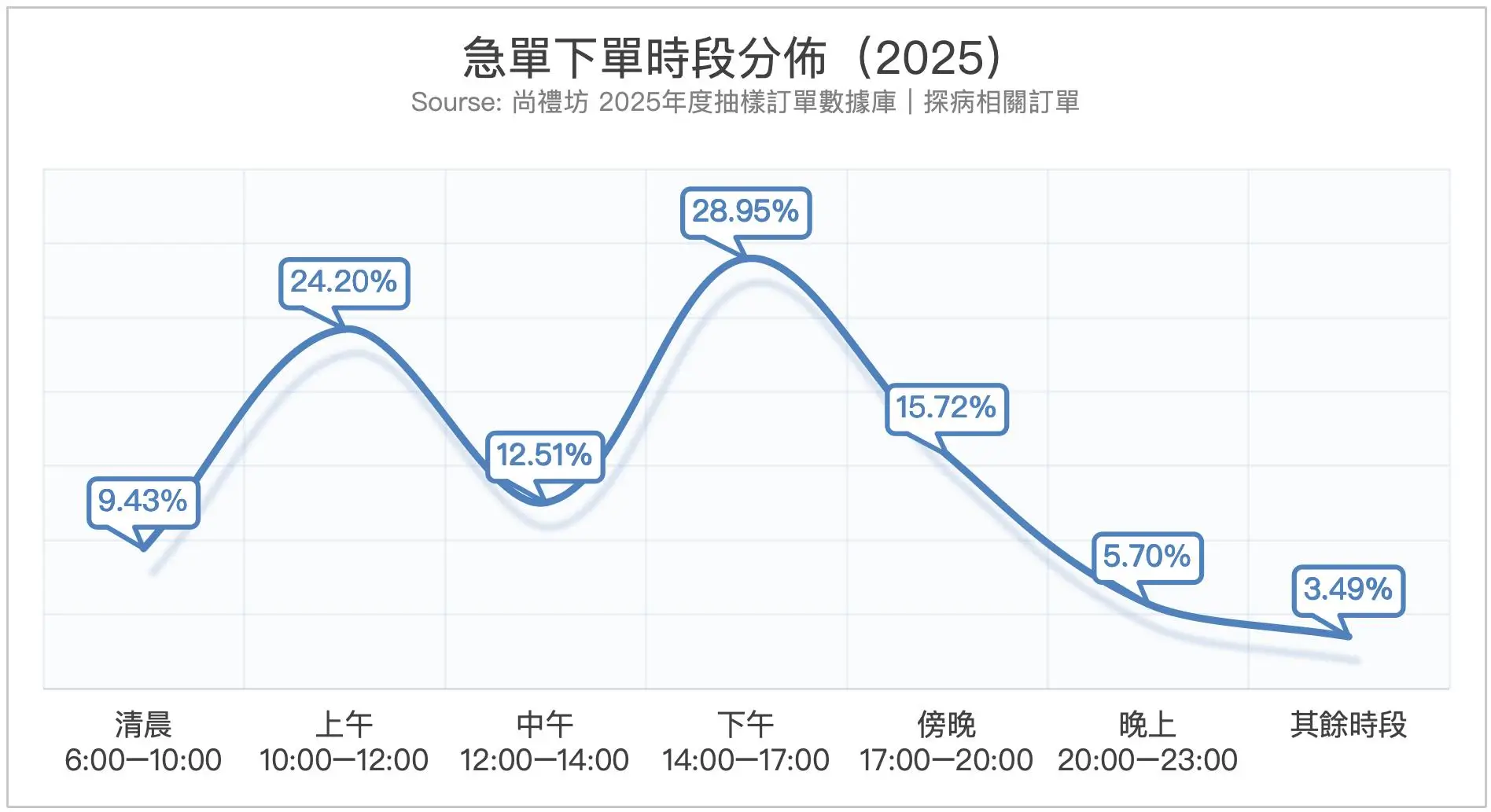
(viii) Delivery time analysis: The demand for delivery time of gifts for visiting the sick is relatively balanced.
Delivery time data for hospital visit orders reveals significant patterns in how consumers schedule the delivery of hospital visit gifts:
|
Ranking |
Delivery time | percentage | illustrate |
| 1 | 14:00–18:00 | 47.51% |
The afternoon session is the most popular, accounting for nearly half of all orders. |
|
2 |
09:00–13:00 | 28.92% | The morning session is the second most popular choice. |
| 3 | 09:00–17:00 | 14.40% |
24-hour delivery, maximum flexibility |
|
4 |
14:00–17:00 | 3.18% | The designated narrower time slot in the afternoon |
| 5 | 14:00–16:00 | 1.10% |
Specify a specific window in the afternoon |
|
6 |
16:00–18:00 | 0.65% | Delivered in the evening |
| — | Other time periods total | 4.24% |
Scattered designated time periods |
※ Data source: Shanglifang 2025 Annual ReportsamplingOrder database.
The distribution of delivery times exhibits a highly concentrated characteristic.The top three time slots (14:00–18:00, 09:00–13:00, 09:00–17:00) accounted for 90.82% of the total.The remaining time slots combined accounted for less than 10%. Among them, "14:00–18:00" dominated with an absolute advantage of 47.511 TP15T, accounting for almost half of the total orders; "09:00–13:00" ranked second with 28.921 TP15T; and the flexible time slot of "09:00–17:00" ranked third with 14.401 TP15T.
|
Time Period Categories |
percentage | analyze |
| Morning period
(Departs around 09:00, arrives before 13:00) |
46.08% |
Visitors to the sick usually arrive in the morning. Gifts should be delivered in advance. |
|
Afternoon (Departs after 13:00, delivered before evening) |
53.92% |
Visiting patients in the afternoon is the main activity. The peak demand period is from 2:00 PM to 6:00 PM. |
※ Data source: Shanglifang 2025 Annual ReportsamplingOrder database.
The number of deliveries in the afternoon (53.92%) was slightly more than the number of deliveries in the morning (46.08%), but the difference was not significant, indicating that the demand for delivery time of gifts for visiting the sick was relatively balanced.Overwhelming dominance during the "14:00–18:00" period (47.51%).This can be interpreted from several perspectives: Firstly, visiting hours at most Hong Kong public and private hospitals are concentrated in the afternoon (usually 2:00 PM to 8:00 PM), so delivering gifts in advance ensures that patients receive them when the visit begins, creating the best welcome effect; secondly, afternoon delivery is compatible with office receiving times, which is beneficial for companies to deliver visiting gifts to the office on weekday afternoons; thirdly, some gift givers hope that the gifts will be received after the patient wakes up from their afternoon nap, so that the patient can enjoy the joy brought by the gifts in a better state of mind.
The large proportion of orders placed during the "09:00–13:00" morning session (28.92%) is related to the daily routines of patients recovering at home—receiving a gift upon waking up in the morning is often the most uplifting moment of the day, and it also aligns with the schedules of recipients such as housewives who are at home during the day. The "09:00–17:00" flexible all-day session (14.40%) is mainly seen for orders with less stringent time requirements, such as gifts planned several days in advance for visiting patients, or situations where family members wait at home all day to receive the gift.
| Delivery Time Insights: Afternoon Visiting Culture Dominates Time Selection
The "14:00–18:00" time slot, with a share of 47.51%, far surpasses all other time slots. The core reason is that Hong Kong hospitals generally adopt an "afternoon visiting hours" system (most hospitals are open for visits from 14:00 to 20:00). Gift givers naturally tend to ensure that gifts are delivered to the ward or home before the start of the visiting hours, so that the recipient feels double care while being visited. This data has direct guiding significance for the delivery capacity planning of gift platforms—the delivery capacity during the afternoon time slot is a key bottleneck to ensure service quality. |
(九Consumption amount analysis: median approximately $645 HKD
The distribution of spending on gifts for visiting the sick fully reflects Hong Kong consumers' precise grasp of the balance between "expressing goodwill" and "acting within their means."
|
Consumption range |
Percentage in 2025 | Market Analysis | Representative gift positioning |
|
$400 and below |
2.62% | A few entry-level | Affordable bonus gifts |
| $401–$600 | 45.36% | Most mainstream range |
Cost-effective fruit and flower combination |
|
$601–$800 |
32.03% | Secondary mainstream | Mid-to-high-end gift baskets |
| $801–$1,000 | 9.56% | Mid-to-high-end |
Gifts for important relatives/elders |
|
$1,001–$1,500 |
7.49% | high-end | Corporate/Important Family Gifts |
| $1, 500 and above | 2.94% | Top |
High-end health products/corporate VIP gifts |
※ Data source: Shanglifang 2025 Annual ReportsamplingOrder database.
Key figures In 2025, the average spending on gifts for visiting the sick was HKD 732, with a median of HKD 645. The three-year trend was: 2023 average HKD 708 → 2024 average HKD 746 → 2025 average HKD 732, generally remaining stable around HKD 700 for $. The mid-price range of HKD 401–800 for $ accounted for a significant 77.39% of all gifts, representing the absolute mainstream in the market. This reflects that Hong Kong gift-givers generally consider HKD 500 to 800 to be an "appropriate range" for expressing sincerity when visiting the sick.
High-end consumption (above HKD 1,000) accounted for 10.431% of total sales, higher than generally perceived. This was primarily driven by two customer groups: firstly, corporate group purchases of high-end business hospital visit gift baskets; and secondly, heartfelt gifts from children to their parents or partners. While these two customer groups represent a smaller percentage, their high average transaction value significantly boosted the overall market average.
| Customer Service Notes
"How much should I give as a gift?" is one of the most frequent inquiries from Shanglifang customer service regarding hospital visits. Our customer service team's observations suggest that for casual friends or colleagues, fruit and flower basket sets priced between $400 and $800 are the most popular, as they are neither stingy nor make the recipient feel indebted. For elders or important family members, health-related gift baskets or high-end fruit and flower baskets priced between $800 and $1,000 better express sincerity. For corporate clients visiting the sick, the business series starting at $800 are most appropriate. |
▶ Shanglifang's $380 and $700 mainstream selection of hospital visit gift baskets:
www.givegift.com.hk/get-well-gift-visiting-hospitals-condolences-gifts
(十Seasonal and monthly distribution
The monthly distribution of orders for hospital visit orders reveals a cyclical pattern in the demand for gifts during hospital visits:
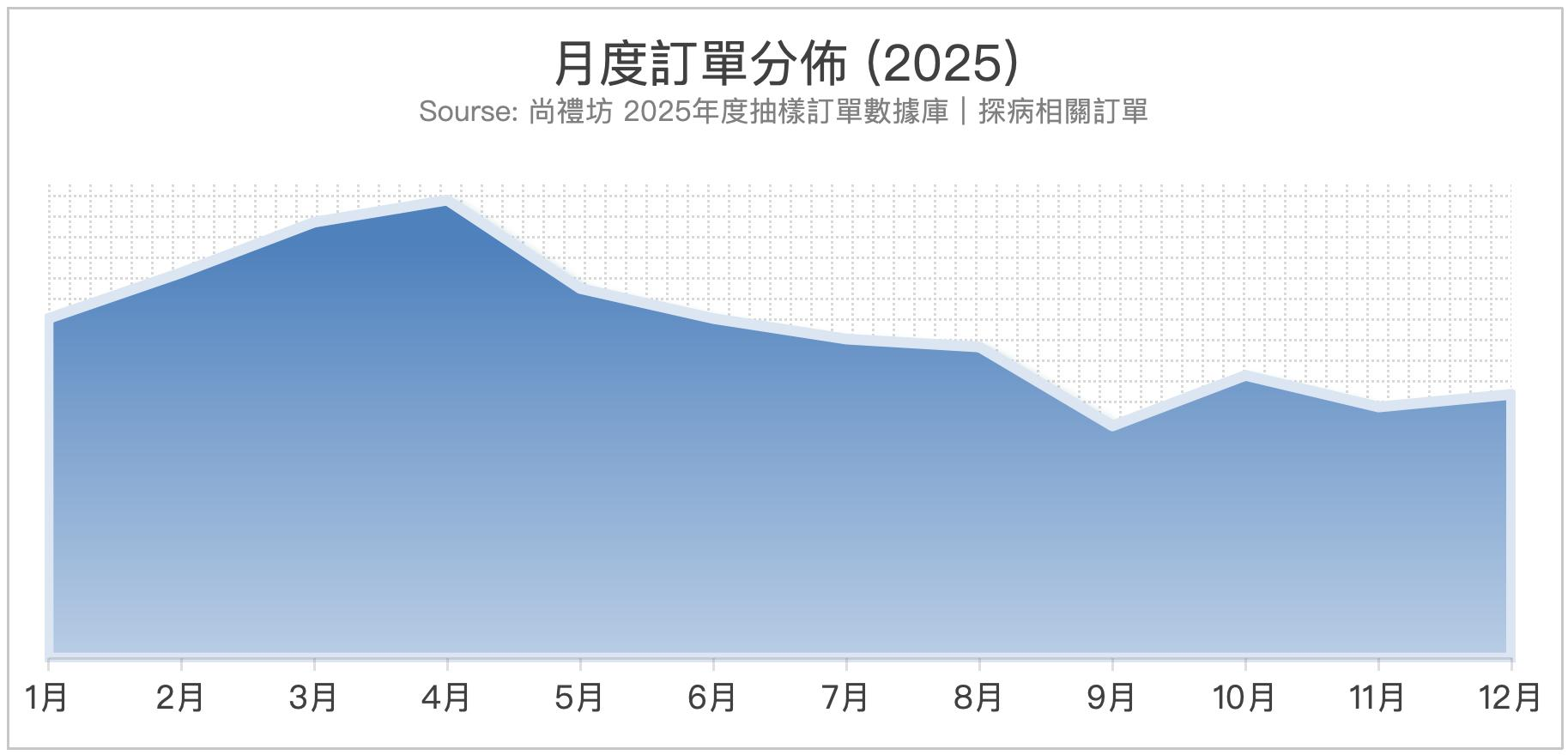
Overall, the first half of the year (January to June) is the peak season for gift-giving when visiting the sick, coinciding with Hong Kong's winter peak season for respiratory illnesses. The Hong Kong Department of Health and the Hospital Authority publish influenza peak season data every year, showing that the winter and spring seasons (especially December to March) are the period with the highest concentration of emergency room and hospitalization visits, directly driving up the demand for gifts for visiting the sick.
Orders were relatively low in the second half of the year (July to December), partly because some Hong Kong residents traveled abroad during the summer holidays, and partly because hospital stays for summer epidemics (such as gastroenteritis) are usually shorter, resulting in a lower trigger rate for visiting patients.
三A Look Through Gift Cards: A Relationship Chart Between the Gift Giver and the Gift Recipient
Greeting cards are the most emotionally resonant element among hospital visit gifts, offering a unique window into the relationship between the giver and the recipient. An analysis of the greeting card content from Shanglifang's 2025 hospital visit orders reveals a relational map of the hospital visit gift-giving scene in Hong Kong.
(一)Analysis of the Meaning and Blessing Types of Greeting Cards
As a highly compressed medium of emotional expression, greeting cards for the sick often carry multiple social functions within a small space. Through a systematic analysis of the content of these cards, six core themes of blessing can be identified. These themes are not mutually exclusive, and some cards simultaneously encompass multiple meanings.
|
Blessing Theme |
Representative terms | percentage |
| Hoping for recovery | Get well soon |
76.8% |
|
Encourage rest |
Get some rest, take care, take good care. | 16.6% |
| Expressing care and companionship | Thinking of you, We are here for you, Missing you, Thinking of you |
7.7% |
|
Wishing you health and longevity |
Good Health | 8.9% |
| Encourage positive energy | Fighting, Come on, Strong, Brave, You can do this |
4.5% |
|
Looking forward to reunion |
I can't wait to see you, I'm waiting for you to come back, Miss you. | 5.1% |
| Religious blessings | God Bless, Pray, God's grace, God's hope |
3.2% |
|
Surgery Blessing |
Surgery successful, Postoperative recovery |
2.4% |
※ Data source: Shanglifang 2025 sample order database.
The following provides further explanation for each category:
-
Wishing for a speedy recovery: the most mainstream and core expression of blessing.
"Wishing for a speedy recovery" is the dominant theme of visiting cards for the sick, with a staggering 76.81 TP15T of cards using this as their core message. In English, "Speedy Recovery" appears most frequently, far exceeding other variations; in Chinese, "早日健康" (soon-happy recovery) is the dominant phrase, with occasional variations like "快快健康" (quickly recover) or "急趋健康" (recover as soon as possible), and colloquial Cantonese expressions such as "快D好番" (quickly get better). It's noteworthy that this type of blessing is widely used across almost all relationship types, regardless of the closeness of the relationship between the giver and recipient, demonstrating its high versatility and safety in social contexts.
Get well soon and all the best!
"Wishing You a Speedy Recovery! May this hamper bring you comfort and joy as you heal."
-
Encouraging Rest: Caregivers' Thoughtful Reminders
Expressions encouraging rest and relaxation, accounting for 16.61% of cards (TP15T), are frequently seen in cards used between close friends and family, demonstrating the giver's awareness of their role as caregiver. These expressions often appear in combination with phrases like "get some rest," "rest quietly," and "take care," sometimes accompanied by expressions of concern for the patient's mental state, such as "looking great" or "relax." Some cards even provide personalized advice based on the patient's specific situation, reflecting the giver's familiarity with the recipient's daily life.
Wishing you a speedy recovery! Take good care of yourself and rest well; may you be full of energy!
"Please have some good rest and our thoughts are with you all the time. Take care and reach out to us any time if you need our assistance."
-
Positive Energy Encouragement: Celebrating Courage and Willpower
In the positive and encouraging expressions (4.51% of total gifts, 15% of total gifts), the giver often moves beyond the passive voice of "wishing" and actively endorses the recipient's willpower and courage. This type of expression is often seen in situations where the illness is known to be serious (such as major surgery or cancer treatment), or when there is a significant emotional investment between the giver and recipient. "Strong," "Brave," "Tough," "加油," and "Fighting" are frequently used words, and some cards even use culturally significant blessings like "dragon-horse spirit" to symbolize encouragement and empower the recipient.
"You are so strong and brave, and everyone is cheering for you to feel better real soon."
"Remember you are strong. You are loved!"
Wishing you a speedy recovery, good health, and boundless energy!
-
Looking forward to reunion: an expression of emotion anchored in the future
The 5.1% card clearly expresses the expectation of a future reunion and return to normalcy. Such expressions are often one of the most powerful sources of emotional support for patients—they suggest a high degree of confidence in recovery and paint a picture of a "normal life" worth looking forward to. Cards from colleagues or work teams typically use phrases like "We can't wait to have you back" or "Looking forward to seeing you back in the office." On social media, phrases like "Can't wait to see you" and "Waiting for you to come back" are more common.
「We can't wait to have you back! <3」
Wishing you a speedy recovery, we're waiting for you to come back!
(二Relationship distribution estimation
|
Gift-giving relationship |
Estimated proportion | Typical greeting card phrases |
| friend | 55.0% |
"Get well soon, my friend! We're all waiting for your recovery!" |
|
Colleagues/Company |
39.5% | "Wishing you a speedy recovery! The whole team misses you." |
| Family/Partner | 2.3% |
Wishing you a speedy recovery and good health! |
|
Doctor-patient relationship |
1.1% | "A benevolent heart and skillful hands, a model of medical excellence." |
| other | 2.1% |
Various congratulatory messages |
※ Data source: Analysis of the contents of the sampled orders for greeting cards from Shanglifang in 2025.
1. Friendship (55.0%): The largest relationship group in the sample.
"Friends" is the most common gift-giving relationship in this dataset, accounting for 55.01 TP15T. The criteria for determining this type of relationship include: the card is signed with an individual's name (not a company name), the tone is friendly but not that of a family member, and the use of emotional words such as "my friend," "buddy," "miss you," and "love." It is worth noting that the definition of "friends" is quite broad, encompassing all personal relationships sent in an individual's name that are difficult to categorize into other specific categories. Therefore, it may actually include some distant relatives, neighbors, or semi-acquaintances within a social circle.
These cards exhibit the most diverse language styles, ranging from brief "Get Well Soon!" to lengthy expressions rich in emotion, with the widest range of tones, best reflecting the diverse friendship landscape of Hong Kong society.
"Don't be upset, you will definitely be able to overcome your tribulations. Whether you have had a smooth time or a rough time, these experiences will all be treasures in your life." Take a rest, you will recover quickly, and everything will be better.
2. Colleague/Corporate Relationships (39.5%): Highly Formulaic Institutional Blessings
The "colleague/company" cards, accounting for 39.51% of TP15T, represent an undeniable institutional force in the culture of gift-giving during hospital visits. The main characteristic of these cards is that the signature includes the company name, department name, team name, or job title, such as "**Team" or "HR Department."
It is noteworthy that some corporate cards are highly standardized, with even identical card text being used in batches. For example, the phrase "Please have some good rest and our thoughts are with you all the time. Take care and reach out to us any time if you need our assistance" appears repeatedly in the dataset, indicating that companies have developed a standard template for visiting cards.
Another characteristic of corporate cards is that they are generally more formal and restrained in tone, using fewer emotional words and often ending with phrases such as "Warm regards," "Best wishes," and "Sincerely." Some cards reflect a customer service nature, serving both a business remedial function and a humanistic concern.
"Please have some good rest and our thoughts are with you all the time. Take care and reach out to us any time if you need our assistance."
"Wishing you a speedy recovery and we can't wait to have you back!"
3. Family (2.).3(%): Warm and understated, revealing deep family affection.
Identifying family relationships primarily relies on the presence of family role terms such as "father-in-law," "mother-in-law," "grandfather," "mother," "Dear Daddy," and "Auntie" in the titles, or the inclusion of terms like "grandson," "elder brother and sister-in-law," "elder sister," or "your sister" in the signature. This proportion is relatively low, reflecting to some extent that immediate family members tend to prefer face-to-face communication when visiting someone in the sick, while greeting cards are mostly used by collateral relatives or distant relatives.
Family cards are often the most personal and demonstrate an understanding of the recipient's specific life circumstances. Some cards are filled with heartwarming details, such as reminding a new mother to "bring the baby to bed early," or expressing the hope and faith to family members overseas to "enjoy eternal happiness together."
"Dear Father-in-law, wishing you a speedy recovery! May you be full of energy and vitality!"
Dear Daddy **, We love you and wish you a speedy recovery! You are strong and you can do this! We are looking forward to seeing you again in Hong Kong soon.」
4. Doctor-patient relationship (1.0%): A special field of reciprocity
This category is rather special, mainly divided into two subtypes: one is a thank-you card from a patient (or their family) to the attending physician, which usually uses phrases such as "benevolent heart and skillful hands", "miraculous healing", and "virtuous and benevolent medical skills"; the other is a batch of Lunar New Year greeting cards sent by a doctor to different departments of multiple hospitals, with the unified content of "Wishing you a happy and prosperous New Year", sent to Hong Kong Sanatorium & Hospital, St. Teresa's Hospital and Hong Kong Baptist Hospital, reflecting the social etiquette culture within the medical industry.
「***Doctors, with their benevolent hearts and skillful hands, bring the dead back to life.***」
(三)Special Card Selection: Messages with a Story
While most greeting cards follow a set framework of standard greetings, a few stand out in the dataset due to their unique context, sincere emotions, or unexpected content. The following selection of the most narrative-driven cards showcases the expressive power of greeting cards in specific contexts.
1. "I love you for ten thousand years" and humorous, witty remarks.
One team card ended with "Love you forever!", an exaggerated expression from a pop song that appeared abruptly in the context of visiting a sick person, eliciting laughter and showcasing the warm and playful camaraderie in Hong Kong's workplace culture. Another card began with "I guess now you have the perfect excuse to rest and escape from business review meeting lol"—a half-joking jab at sick leave, reflecting how working professionals use the context of visiting a sick person to take a break from the pressures of the workplace.
Wishing you a speedy recoveryRehabilitationStay healthy and strong! I love you forever!
"I guess now you have perfect excuse to rest & escape from business review meeting lol. Sit back, relax and speedy recovery!"
2. "The Plan to Conquer the World": A Grand Narrative of Friendship
A single sentence on the card evokes a vivid image: "Hope you're back to full strength soon, so we can resume our plans to conquer the world!" These few words express both a fervent hope for recovery and a poignant portrayal of their ambitious and passionate friendship. While formally a gesture of well-wishes during a hospital visit, the card is, in spirit, a reaffirmation of their shared dream—transforming the heartfelt message into a testament to their unwavering friendship.
"Hope you're back to full strength soon, so we can resume our plans to conquer the world!"
(四Language use analysis
The language used in visiting cards also reflects Hong Kong's multicultural characteristics:
- In Cantonese (Traditional Chinese), the most common blessings are "Get well soon," "Be in good health," and "Get well soon," conveying warmth and kindness.
- In English, phrases like "Get Well Soon" and "Wishing you a speedy recovery" are commonly found in foreign companies, multinational teams, or workplaces where English is the primary language of communication.
- Mandarin (Simplified Chinese): Found in some mainland companies or Hong Kong-based international enterprises, such as "Get well soon and make a strong comeback!" and "Work hard and earn lots of money!"
This linguistic diversity is a microcosm of Hong Kong as an international city, and it also suggests that gift platforms should fully consider the needs of bilingual (Chinese and English) and even multilingual (multilingual) users when designing product descriptions and greeting card templates.
四A Complete Guide to Choosing Gifts for Hospital Visits: What to Give and What Not to Give
Based on Shanglifang's years of market experience and order data, and combined with Hong Kong's medical culture and traditional taboos, the following is a comprehensive guide to gift-giving during sick visits in different situations.
(a) Preferred Gift: Fruit Basket
The fact that fruit baskets have consistently topped the list of gifts for visiting the sick is no accident; it is supported by a triple logic of culture, practicality, and health.
- Cultural Logic: In traditional Chinese thought, fruits symbolize good fortune (e.g., apples are a homophone for "peace" and oranges for "success"), so giving fruits as a gift carries the auspicious meaning of wishing patients a "peaceful recovery and smooth sailing."
- Practical logic: Fruit is one of the most suitable foods for patients during hospitalization or recovery—it is easy to digest, rich in vitamins and minerals, helps the body repair itself, and can be eaten directly without cooking.
- Health logic: Compared to high-sugar and high-fat foods such as cakes and candies, fruits have a smaller impact on indicators such as blood sugar and lipids, making them suitable for most conditions (except for specific dietary restrictions).
The Philosophy of Fruit Basket Selection
1. Fruits to avoid depending on the situation – those associated with damp and hot climates./coldFruits
Some fruits are considered to have a damp-heat nature, which is not conducive to the recovery from certain ailments. If customers have special needs, they may consider avoiding damp-heat fruits such as mangoes and durians, and cooling fruits such as watermelons and star fruit, and instead opting for fruits with a milder nature such as apples, grapes, kiwis, and oranges.
2. Dietary restrictions after surgery or for specific medical conditions
For patients undergoing certain surgeries or suffering from certain diseases, doctors may impose specific dietary restrictions. For example, patients undergoing kidney-related surgery need to limit their potassium intake (bananas and kiwis are high in potassium); heart patients taking anticoagulants (such as warfarin) need to limit their vitamin K intake (which can affect dark-colored fruits and vegetables such as spinach).
Shanglifang's fruit baskets for visiting the sick use high-quality imported and local fruits delivered fresh daily to ensure freshness. They are specially designed for visiting the sick – avoiding hot and humid fruits (such as mangoes) and cold and cooling fruits (such as watermelons) to ensure that the gift is both practical and appropriate.
Energy Replenishment Station: A Fresh Fruit Basket Packed with Vitamins
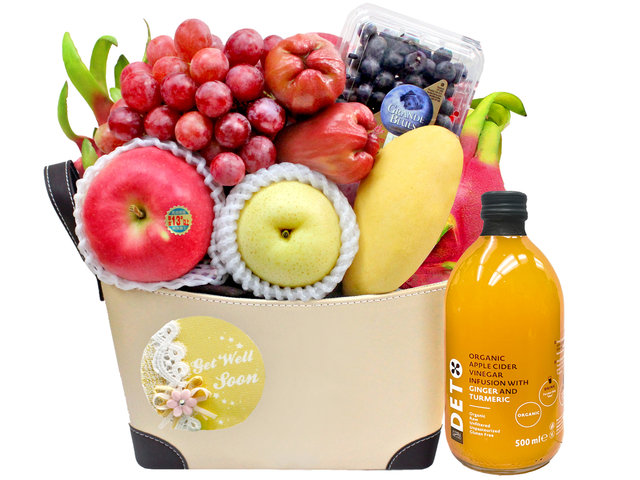
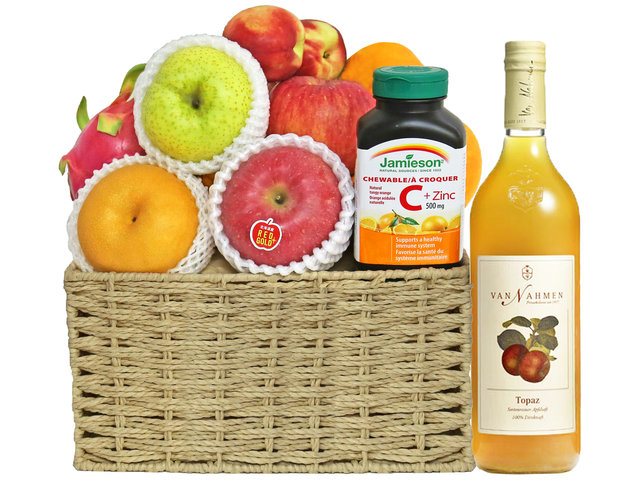
| Common conditions | Physical needs | Shanglifang Product Introduction | Fruit pairing tips |
| Fracture/Trauma Recovery | Promotes collagen and tissue repair | 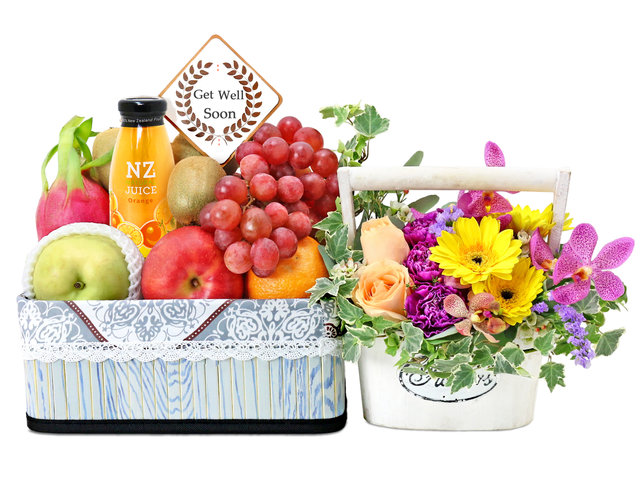
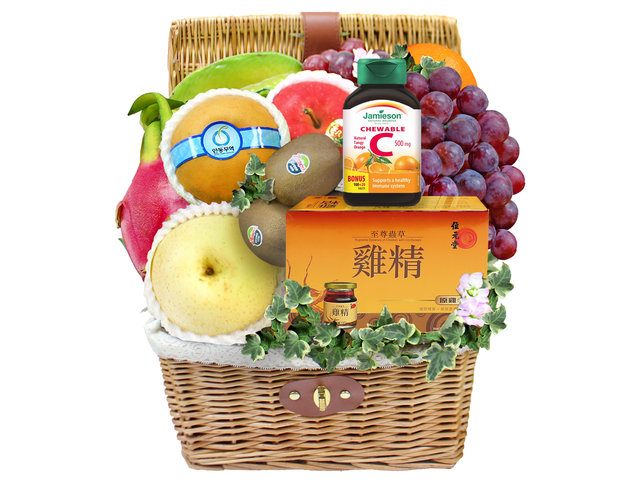
Visiting the sick and offering condolences, fruit and small flower basket combination G5
Premium Fruit Gift Basket for Visiting the Sick and Promoting Health 7 |
Kiwi, oranges, strawberries, and grapes contain vitamin C, which can promote collagen production and accelerate recovery. |
| Gastrointestinal discomfort (stomach pain/diarrhea/poor digestion) | Mild, easily digestible, and low in irritation | 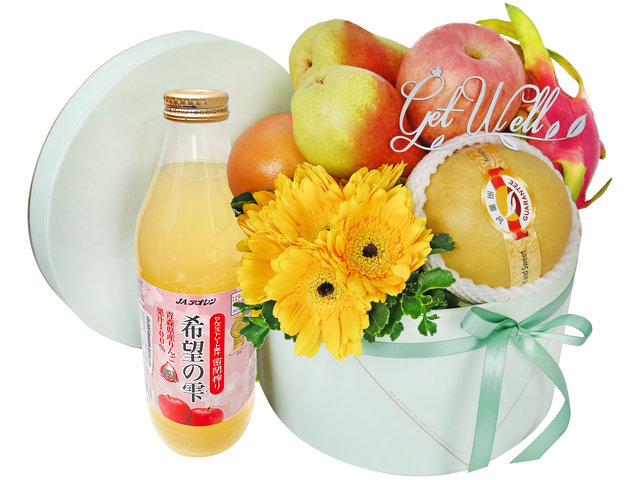
Visiting the sick and offering fruit baskets 11A9
12 Fruit Gift Baskets for Visiting the Sick and Promoting Health |
Primarily consume pears and apples, avoiding spicy or irritating fruits. |
| cold/fever | Hydrate and boost immunity | 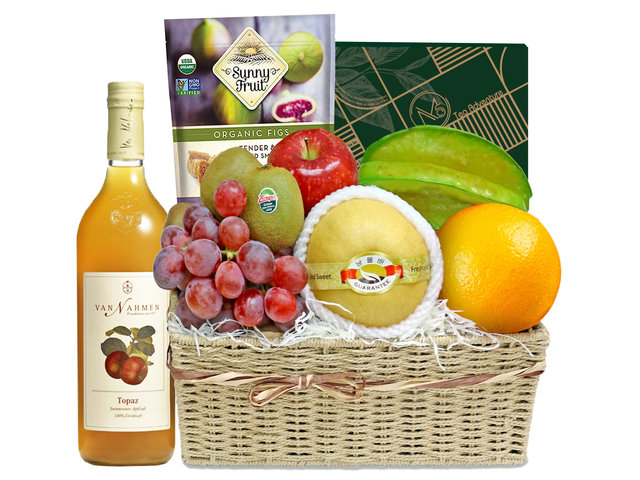
Economical and high-quality fruit basket for visiting the sick G2
Visiting the sick and offering condolences, fruit and food gift baskets, and small flower baskets G1 |
Oranges, pears, and kiwis: a high-vitamin C combination. |
| Sore throat/cough | Moisturizes the lungs and reduces irritation |
Fruit Basket for Visiting the Sick G6
Fruit basket for visiting the sick and offering condolences to those recovering from illness G38 |
Primarily made with crystal pears and apples, these are gentle and soothing for the throat; avoid overly acidic fruits. |
| Hypertension/Cardiovascular | High in potassium, antioxidant | 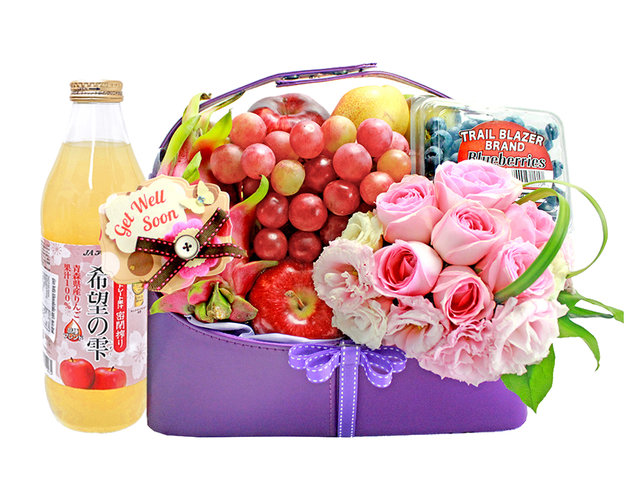
Rehabilitation Fresh Fruit Basket with Small Flower Basket (8 items)
|
Grapes and apples are good for cardiovascular health; bananas, avocados, and blueberries help stabilize blood pressure. |
| diabetes | Low GI, sugar control | 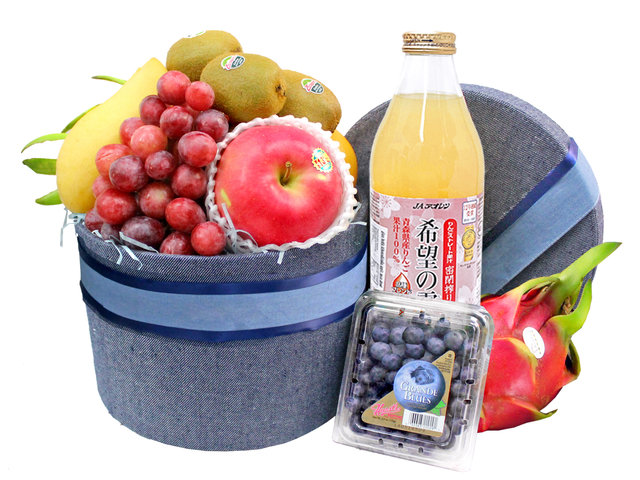
Visiting the sick: Juice and fruit basket G8
Visiting the sick and offering condolences, fruit and small flower basket combination G5 |
Eat mainly apples and pears, and avoid high-sugar fruits (durian, lychee, longan). |
| Postoperative recovery | High nutrient density, promotes repair | 
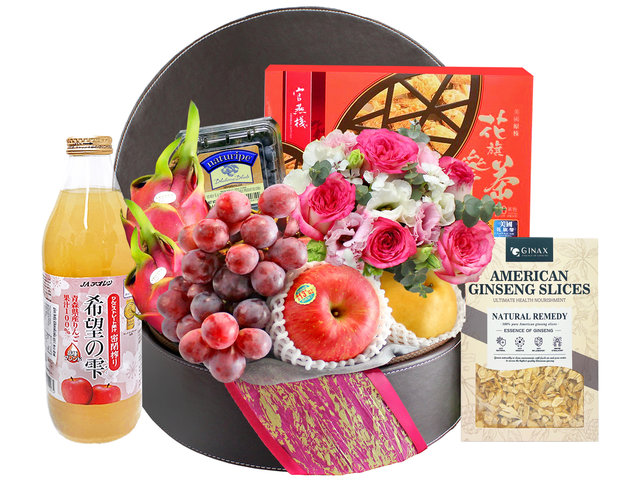
Premium health and wellness gift fruit basket A4
|
A variety of fruits + bird's nest, ginseng, and fish maw |
| anemia | Promote iron absorption | 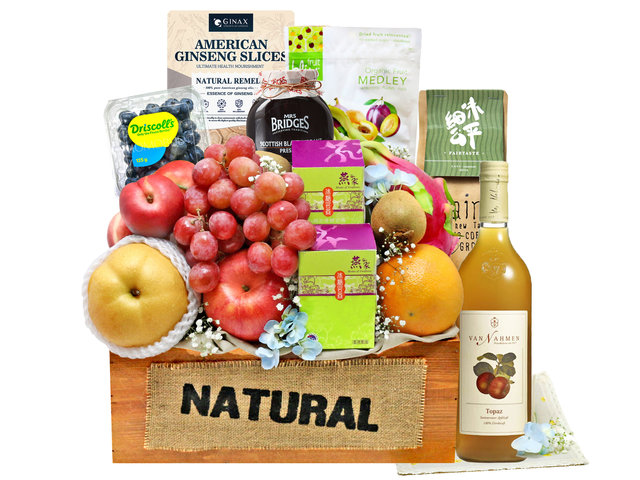
Premium Gift Gourmet Fresh Fruit Basket G24
|
Oranges, kiwis, and pomegranates can improve iron absorption. |
| Stress/Insomnia | Relax your nerves and stabilize your emotions | 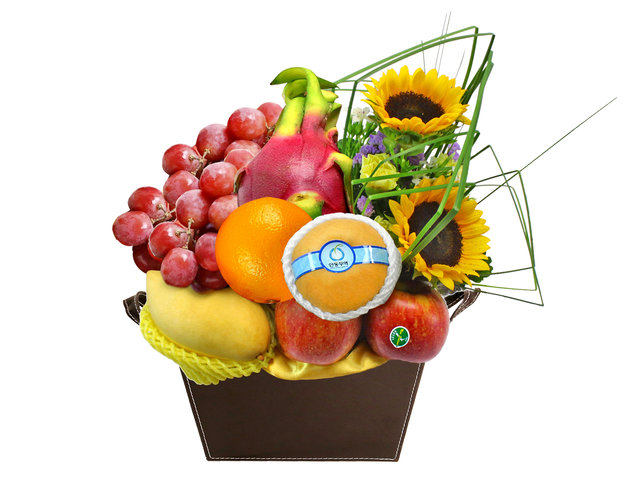
Mini fruit basket with flowers 8
|
Bananas (containing tryptophan), cherries (containing melatonin), grapes, and fruits with natural sugars |
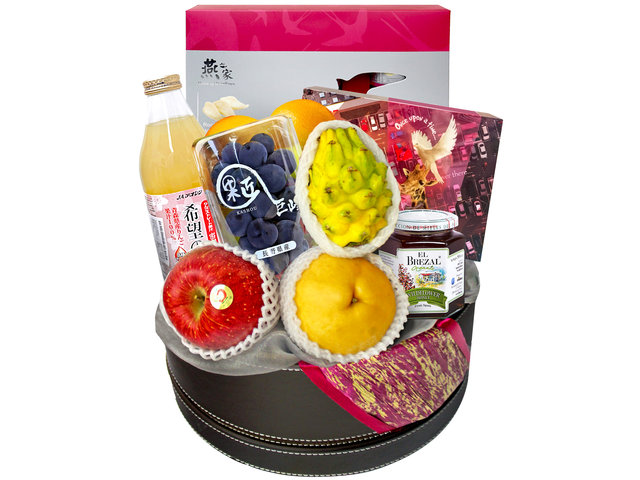
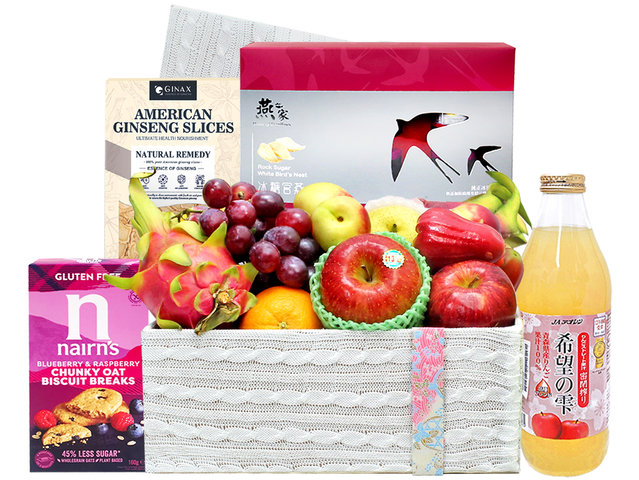
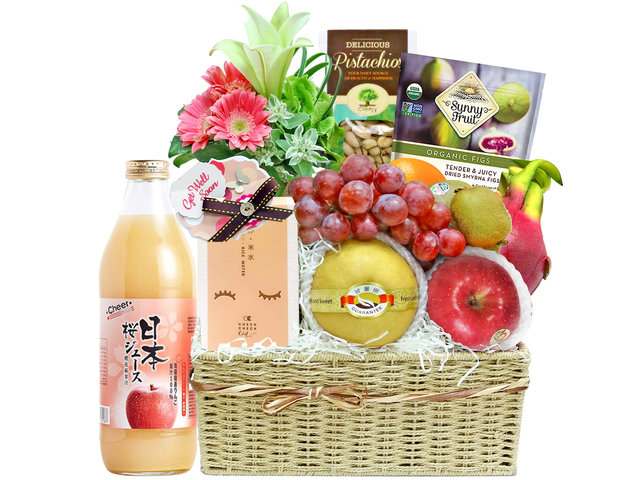
(two)Popular ChoiceFruit and flower combination
"Fruit + flowers" gift sets make up a significant proportion of the Top 30. Their appeal lies in "double thoughtfulness"—providing patients with the fresh fruit they actually need, while adding vitality to the ward or home environment with a basket of flowers, helping patients maintain a positive attitude.
There are unwritten "rules" regarding flower selection for visiting the sick and giving gifts:
- Recommended choices: Light-colored flowers (white, pink, light purple) – symbolizing purity and blessings; Yellow roses – symbolizing friendship and recovery in Western culture; Hydrangeas – large and beautiful flowers, pleasing to the eye when placed on a desk.
- Avoid: Chrysanthemums (traditionally associated with funerals); pure white lilies (some elders consider them unlucky); flowers with strong fragrances (may affect the air quality in the ward or make those sensitive to smells uncomfortable).
Shanglifang's hospital visit flower baskets mostly feature a desktop design, making them convenient to place next to hospital bedsides or on home tables. They require no special care; simply adding water is enough to maintain their bloom, making them ideal for hospital visits.
Small details that are easily overlooked when choosing a bouquet
1. Pay attention to hospital regulations
In Hong Kong public hospitals and some private hospital wards, especially ICUs, post-operative recovery rooms, and neonatal wards, bringing flowers or plants is strictly prohibited. It is advisable to call the hospital before visiting to check the relevant regulations. If it is confirmed that flowers are not allowed, consider bringing a fruit basket, health gifts, or delivering them to the patient's home after discharge.
2. Preserved flowers: the best alternative
Preserved flowers, also known as "preserved flowers," are made from real fresh flowers through special dehydration and color preservation treatments. They can maintain their color and shape for up to several years, require no watering or maintenance, and do not have the problem of pollen shedding.
For the following situations when visiting a sick person, preserved flowers are a better choice than fresh flowers:
- The patient has pollen allergies or tracheal problems.
- The hospital explicitly prohibits bringing flowers into the hospital.
- The patient still wishes to keep a lasting memento after being discharged from the hospital.
- Transferred to special wards such as the Intensive Care Unit (ICU)
Another advantage of preserved flowers is that their exquisite appearance presents a high-end feel, making them suitable for companies to give to important clients or partners, showcasing the giver's taste and sincerity.
3. Considerations for placement
While flower bouquets are beautiful, their practical placement needs to be considered when delivering them to a hospital. Hospital rooms typically have limited space, and patients and their families may not have the time or vases to properly arrange the bouquets. Therefore, the following options are recommended:
- Desktop Hospital Visit Flower Basket: Fresh flowers are already inserted into the basket or floral arrangement; simply add water. No separate vase is needed. Suitable for placing on a bedside table.
- Vase and Fresh Flower Arrangement: The complete vase and flowers are delivered together, ready to be placed upon opening the box, saving you the trouble of arranging them.
- Floral gift boxes: Fresh flowers paired with health supplements or premium products, combining aesthetics and practicality.
Healing Dopamine: Textured Floral Arrangements to Brighten Up a Hospital Ward
Recommendation 1:20 flower baskets for visiting the sick
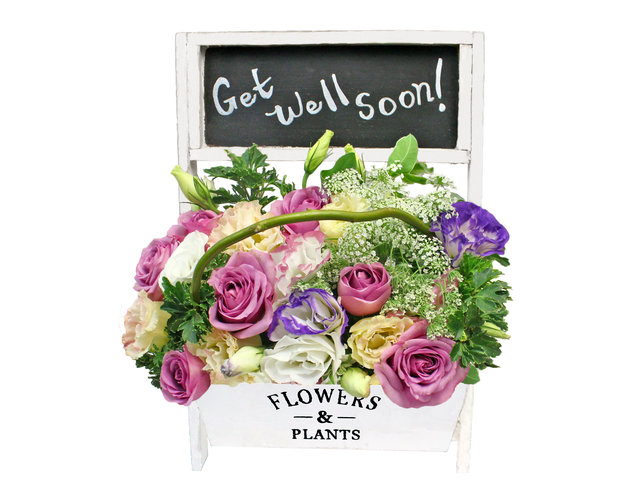
This is a classic desktop flower basket for visiting the sick, featuring carefully arranged purple roses and champagne lisianthus as the main flowers, complemented by elegant filler flowers. The flowers are already properly arranged in the basket, so there is no need for a separate vase. Simply place it next to the bedside or on the bedside table to enjoy the view. It is also easy to maintain.
Recommendation 2:Rehabilitation Floral Gifts RF02
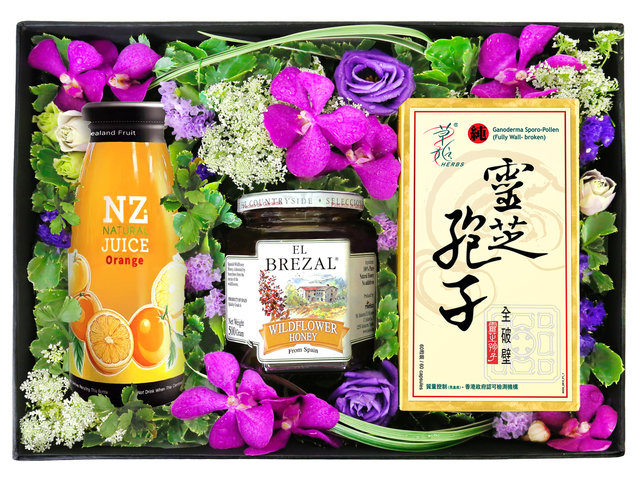
This gift, a perfect blend of floral art and health products, features a beautiful boxed bouquet, accompanied by a bottle of organic juice rich in Vitamin C, a jar of premium honey (which soothes sore throats and fevers), and a health supplement. Combining aesthetics and practicality, it is an excellent choice for visiting the sick.
Recommendation 3:Gifts for a speedy recovery (7)

Lightweight and exquisite floral gifts for visiting the sick, with a simple yet warm design, are suitable for visiting relatives and friends, or as a lightweight gift for colleagues to give as a group present. Affordable yet full of thoughtfulness.
Recommendation 4:Health and wellness gift flower box
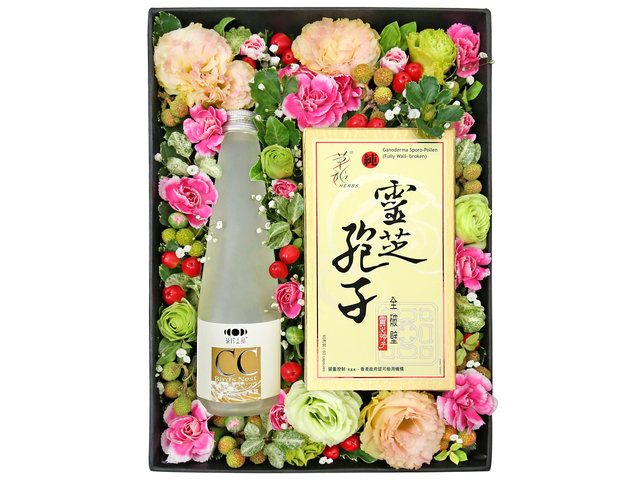
This health gift basket comes in a flower box and is paired with healthy ingredients. The floral arrangement and health products complement each other perfectly, offering both a pleasing visual effect and practical health benefits, making it ideal for homes or offices.
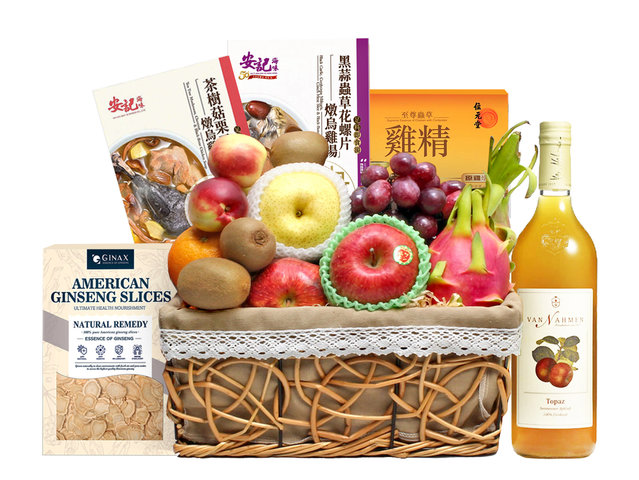
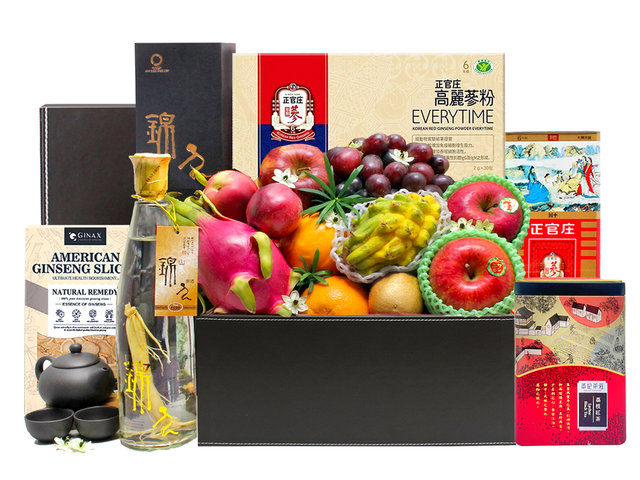
(III) Recommended for special occasions: Health gift basket
For those with chronic illnesses (such as heart disease, cancer, chronic kidney disease, etc.), those recovering from surgery, or the elderly, a health gift basket is a more targeted choice. Common contents of a health gift basket include:
- Bird's nest: A traditional Hong Kong tonic, it helps boost immunity and aids in post-operative recovery, and is widely popular among the elderly.
- American ginseng: replenishes qi and nourishes yin, especially suitable for those whose vital energy is depleted after surgery.
- Chicken bouillon: Provides high-quality protein, which helps with wound healing and physical recovery.
- Organic fruit juices and healthy snacks: a healthy alternative for patients who cannot eat fruit.
- Health vitamins (such as vitamin C and Omega-3): One of the popular gift options for visiting the sick in recent years.
However, it should be noted that some health supplements (such as ginseng and tonics) may interact with certain medications or be unsuitable for certain conditions (such as blood pressure medication with grapefruit, or some traditional Chinese medicines used during chemotherapy). If the recipient's medication regimen is uncertain, it is advisable to choose milder traditional tonics such as bird's nest or chicken essence, and to include a note in the gift card reminding the recipient to consult a doctor if they have any questions.
Hardcore wellness trend: Health gift baskets loved by elders
Recommendation 1:Visiting the sick and providing health and wellness gift baskets
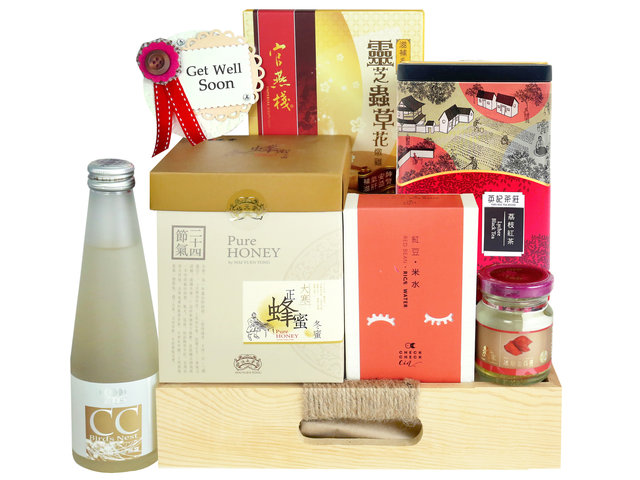
This wellness gift basket for those recovering from illness features a selection of nourishing ingredients, including bird's nest from Guan Yan Zhan, American ginseng, and premium organic apple cider vinegar. Presented on an elegant wooden tray, the packaging is both environmentally friendly and tasteful, earning high praise from customers. Traditional Chinese medicine practitioners have also commended the well-balanced ingredients, making it an ideal gift for those recovering from various illnesses. A recyclable bamboo basket is included, adding to its eco-friendly and practical appeal.
Recommendation 2:Health and Wellness Fruit Basket G4
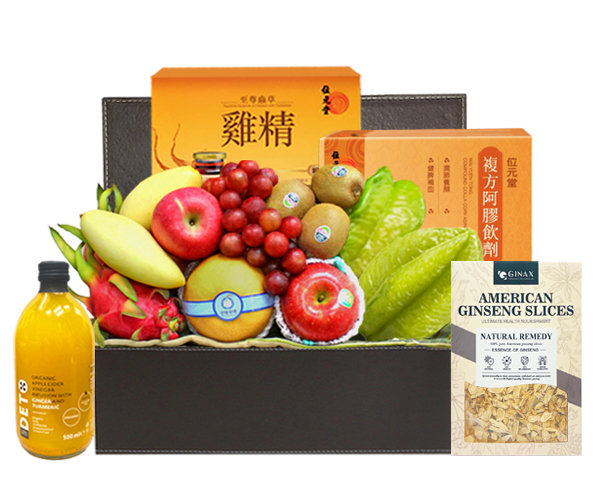
The G4 Health and Wellness Fruit Basket for Hospital Visits is one of Shanglifang's flagship gift baskets, containing a variety of carefully selected health supplements, suitable for patients who need comprehensive nutritional support during their hospital stay. The rich and balanced selection makes it a perfect gift for family, friends, or business clients, and a best-selling choice among health and wellness gift baskets for hospital visits.
recommend三:Boost Immunity Hamper AN04
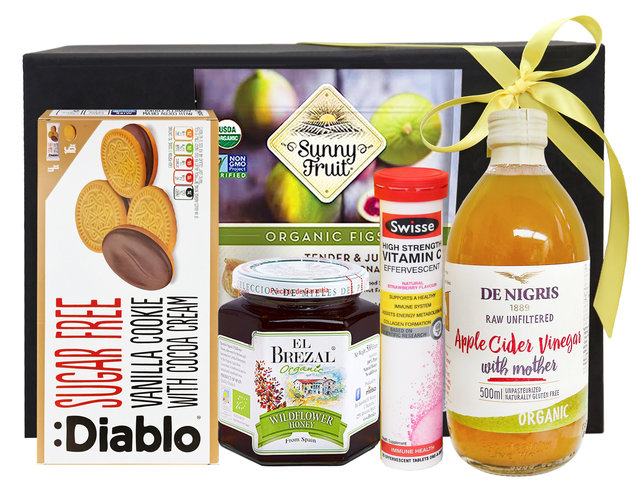
This gift set combines delicious food with immune system boosting, making it an ideal choice for post-illness recovery and prevention of relapse. The immune-boosting health supplements, presented in an elegant gift box, are suitable for gifting during flu or other illness peaks, and also perfect for visiting recovering colleagues or clients in the office.
(iv) List of Taboos and Avoidances
Besides choosing the right gift, it's equally important to avoid various taboos associated with visiting someone in the sick. The following is a compilation of industry knowledge accumulated by Shanglifang over many years:
| Visiting the sick and giving giftsThreeTaboo
① Fruits with overly strong odors: durian, jackfruit, overripe mango, etc. ② Chrysanthemums (related to funerals) ③ Flowers with strong fragrances (affect the ward environment) |
It is worth noting that some of the taboos mentioned above are traditional Chinese customs and may not apply to all recipients from all cultural backgrounds. For example, if the recipient is from a Western cultural background, chrysanthemums and some traditional taboos may not apply. In multicultural Hong Kong, understanding the recipient's cultural background is an important factor to consider when choosing gifts for visiting the sick.
(五These hidden details determine whether you are a thoughtful and considerate visitor.
Timing selectionNot all patients are suitable for same-day visits. In the initial postoperative period, patients need ample rest and should not be disturbed excessively. It is advisable to contact the patient or family in advance to determine a suitable time for a visit, or to choose to have a gift delivered by a professional florist, which expresses your sentiments without disturbing the patient's rest.
The visit should not be too long.Even when visiting, each visit should ideally last between 30 minutes and 1 hour to allow the patient sufficient rest time.
Avoid introducing sources of infectionIf you have a cold or other infectious disease, you should avoid visiting in person. You can choose to order a gift online and have it delivered on your behalf, along with a greeting card to express your best wishes.
Masters of Ambient Atmosphere: Rituals Fragrances Offer Sensory Healing
Rituals is a renowned international top-tier skincare and aromatherapy brand from the Netherlands, famous for its philosophy of holistic well-being that blends Eastern and Western cultural wisdom. Its products include bath and body care lines, skincare products, scented candles, and aromatherapy hand creams. Its exquisite and elegant packaging, along with its relaxing aromatherapy experience, makes it a high-end choice for gifts during illness or recovery, and especially for corporate occasions.
Shanglifang is the official partner of Rituals, offering a variety of Rituals gift boxes and corporate customization services.
Recommendation 1:The Ritual of Yozakura Night Cherry Blossom Set (Limited Luxury)
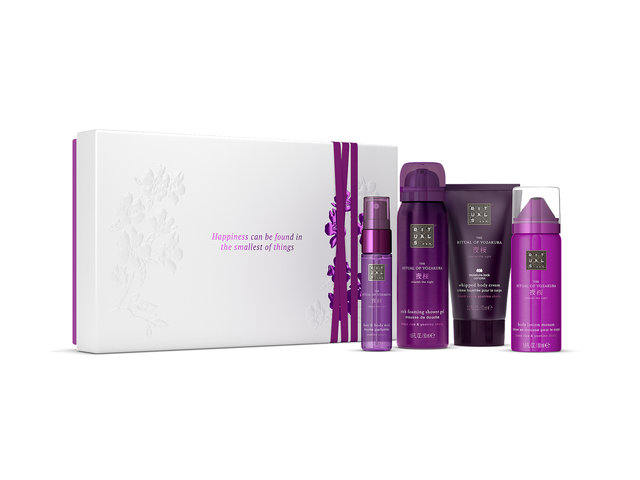
This is currently the most eye-catching "limited edition" top choice. It combines the mysterious fragrance of night-blooming cherry blossoms with the warmth of black rice, offering a more tranquil feel than the classic cherry blossom series. Hospital life can be monotonous, and this fragrance is like lighting up a spring night cherry blossom festival in the ward, allowing patients to feel the positive energy of "rebirth and blossoming," providing excellent psychological healing!
Recommendation 2:Rituals Private Collection Set (with preserved flowers)
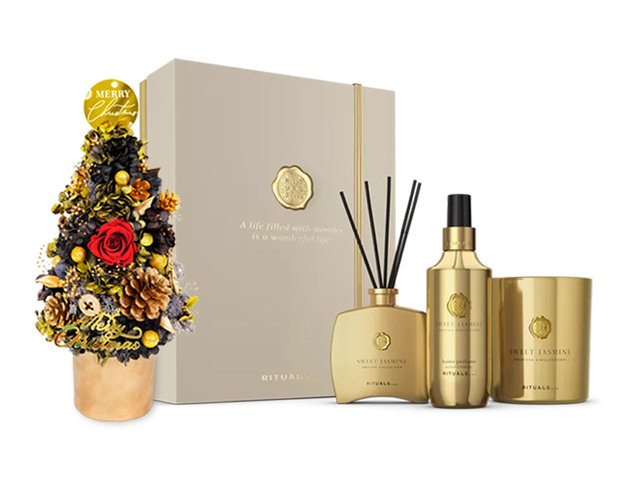
If you're looking for a gift with a "CEO-level" feel, this combination of Private Collection premium fragrance and exquisite preserved flowers is the perfect choice. The Private Collection boasts incredibly rich and layered scents, almost like high-end niche perfumes. Paired with preserved flowers that bloom for a long time without needing any care, it instantly transforms an otherwise monotonous hospital room into a five-star spa suite.
Recommendation 3:Skincare Gift Basket (FH269) (Deep Nourishment)
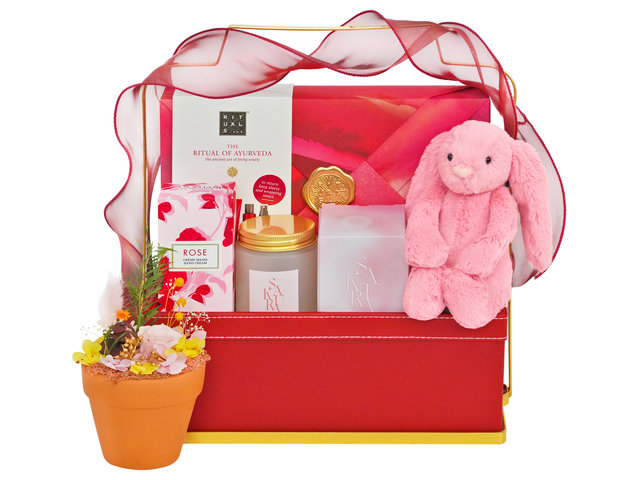
Prolonged bed rest or air-conditioned environments often lead to dry, itchy skin. This gift basket is designed for "deep care," combining Rituals' renowned skincare gift set with a Jelly Cat plush toy. The gentle touch and refreshing scent effectively soothe chronic discomfort, allowing patients to experience a sense of comfort and well-being while caring for their skin.
Recommendation 4:A brand new gift basket (FH317)
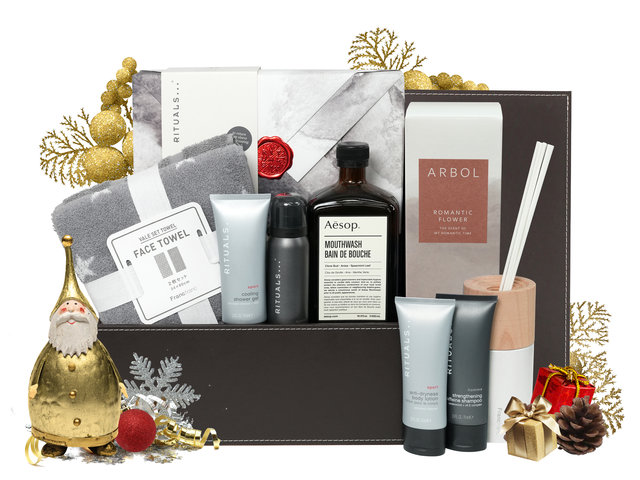
Who says exquisite fragrances are only for women? This recovery proposal, tailor-made for men, uses refreshing and vibrant scents from Rituals (such as cedar and old wood) to help male friends in the hospital maintain cleanliness and appearance during their recovery. This is not just a toiletries gift, but also a warm encouragement to "regain your fighting spirit soon".
五Corporate Hospitality Gift Giving Special: Workplace Etiquette and Procurement Strategies
Among Shanglifang's hospital visit orders, corporate clients (orders placed in the name of companies, departments, or HR departments) account for a significant proportion. Corporate hospital visit gifts differ from personal gifts, requiring a precise balance between "thoughtfulness" and "professional image."
(I) Four Scenarios for Corporate Visits and Gift Giving
- Employee hospitalization: an important manifestation of a company's culture of care. When management or HR representatives deliver gifts on behalf of the company, it conveys the message that "the company cares about you," which helps maintain employees' sense of belonging and loyalty and is also an integral part of the workplace culture.
- Hospitalization of employees' family members: Some aspects of the company culture extend to employees' immediate family members (spouse, parents, children), reflecting a deeper level of humanistic care.
- A client/partner's hospitalization: a crucial opportunity to maintain business relationships. A well-chosen visit to the sick often leaves a lasting positive impression in business dealings, sometimes even more emotionally impactful than regular business socializing.
- Hospitalization of industry partners/suppliers: Maintaining relationships within the industry ecosystem and showcasing the company's business etiquette and professional image.
(II) Recommendations on Enterprise Procurement Strategies
When purchasing gifts for visiting the sick, businesses should pay attention to the following points:
- Budget setting: For general staff visiting the sick, a fruit and flower basket combination in the range of $500-$800 is appropriate; for high-level clients, the budget can be increased to $800-$1,500 to show the importance attached to the client; for senior management or important clients, a high-end health gift basket or flower basket of $1,500 or more is more suitable.
- Product Selection: When giving gifts to businesses, it is advisable to choose "safe" gifts such as fruit and flower basket sets or condolence gift baskets. These gifts are free from cultural taboos, are practical and aesthetically pleasing, and are suitable for most cultural backgrounds.
- Greeting Card Language: Corporate greeting cards should emphasize sincerity and avoid overly commercial language. It is recommended to use the company name and include the signature of the direct supervisor or colleague to make the recipient feel personally cared for.
- Centralized procurement benefits: Large enterprises can consider establishing corporate accounts with professional platforms such as Shanglifang to enjoy bulk purchasing benefits and customized services, thereby improving efficiency and saving costs.
- Delivery records: Companies should keep records of orders and deliveries of gifts for visiting the sick for internal auditing and expense reimbursement purposes.
(III) Special Considerations for Cross-Cultural Business Environments
As an international financial center, Hong Kong has many multinational companies whose employees and clients come from diverse cultural backgrounds. In cross-cultural situations involving visiting the sick or giving gifts, extra considerations are necessary:
- For Western colleagues/clients: Traditional taboos regarding chrysanthemums and pears have no effect on them, but fruit is still a generally safe choice; you can also consider a small fruit basket to go with a greeting card, which is relaxed yet thoughtful.
- Muslim colleagues/clients: Ensure that the gift basket contains no alcohol; the ingredients of some food gift baskets need to be carefully checked (such as whether the chocolate contains alcohol and whether the food is halal certified).
- Indian colleagues/clients: Some are vegetarians, so please ensure that the gift basket does not contain animal products; spices and health supplements may be a culturally appropriate choice.
In a multicultural workplace, a fruit basket is the most cross-culturally inclusive gift for visiting the sick—it doesn't involve religious, dietary, or cultural taboos, is suitable for recipients from almost any background, and is the first choice for most companies.
六The psychology of gift-giving during hospital visits: Why the meaning of a gift transcends its material value.
From a psychological perspective, the function of gift-giving during illness visits goes far beyond simply "giving a physical gift." Multiple studies have confirmed that social support has a significant positive impact on both the mental health and physical recovery of patients.
The "Social Support Theory" in social psychology points out that the degree of social connection a patient feels during hospitalization or recovery is closely related to the speed of their psychological recovery and overall prognosis. A basket of carefully selected fruit or a bouquet of brightly colored flowers conveys the core message that "you are remembered and you are not alone," and its psychological benefits far exceed the value of the material itself.
| Research Perspective: The Psychological Benefits of Flowers to Patients
Multiple international academic studies have shown that patients in hospital wards with flowers and plants tend to exhibit lower anxiety levels, better emotional states, and higher pain tolerance. A study from the University of Leeds in the United States also indicated that in a recovery environment with flowers present, patients' positive evaluations of healthcare workers significantly improved, and their motivation for recovery was more proactive. |
This psychological benefit, to some extent, explains why the "fruit + flower" gift combination accounts for the highest proportion of Shanglifang's sick visit orders: consumers (perhaps unconsciously) choose a combination that can simultaneously satisfy practical needs (the nutritional value of fruit) and psychological needs (the visual pleasure and emotional symbolism of flowers), thereby maximizing the positive impact of the gift on the recipient.
Furthermore, in Chinese cultural tradition, "li" (礼, etiquette) itself has an important social function—the exchange of gifts is not only a flow of material goods, but also a confirmation and reinforcement of social relationships. Visiting someone in the sick and giving gifts is a social ritual that "affirms that our relationship still exists in difficult times," and its symbolic meaning far exceeds the market price of the gift.
七Evolution and Future Prospects of the Hospital Visit Gift Market
The Hong Kong hospital visit gift market has shown several significant evolutionary trends in recent years, driven by demographic changes, consumer attitudes, technological advancements, and public health events.
(a) Online procurement has become the mainstream
The rise of online gift platforms like Shanglifang has fundamentally changed the way hospital visit gifts are purchased. Consumers no longer need to visit a florist; they can place orders anytime, anywhere and enjoy direct delivery. This convenience is especially important for busy urban dwellers—and Hong Kong's pace of life is among the busiest in the world. Shanglifang offers 24-hour online ordering, order confirmation within 30 minutes, and same-day delivery, precisely meeting the "immediacy" requirement for hospital visit gifts.
(ii) Personalization trend: Gifts are no longer "one-size-fits-all".
Consumers have increasingly higher expectations for gifts when visiting the sick, with "personalization" becoming a key word. From the wording of greeting cards to the customization of gift basket contents (such as excluding certain types of fruit or adding health supplements that the recipient likes), consumers increasingly hope that gifts can reflect a deep understanding of the recipient, rather than being generic.
This trend is particularly evident in corporate procurement—knowing that clients prefer organic food, that the recipient is a vegetarian, or that the recipient has dietary restrictions are all factors that companies consider when making purchases, driving the demand for customized gift services.
(III) Enhanced awareness of health and wellness
With the increasing awareness of health, the choice of gifts for visiting the sick reflects consumers' high regard for "health." Traditional candy and biscuit gift boxes are playing an increasingly marginalized role in sick visits, replaced by fruits and health care gifts that emphasize "organic," "natural," "low sugar," and "high fiber."
Traditional Chinese tonics such as bird's nest, American ginseng, chicken essence, and plant extracts, combined with modern packaging designs, are attracting a new generation of consumers. Meanwhile, health foods from European and American brands (such as organic juices, natural dried fruits, and superfoods) are gradually entering Hong Kong's sick leave baskets, reflecting the city's multicultural character.
(iv) Population aging drives long-term demand growth
Hong Kong's aging population trend continues to deepen. According to population projections from the Census and Statistics Department, the proportion of Hong Kong's population aged 65 and above will continue to rise from approximately 201,150 in 2021, and is expected to exceed one-third by 2046. Aging directly increases hospitalization rates and the number of patients with chronic diseases, thereby driving a steady increase in long-term demand for hospital visit gifts.
Gifts for visiting the elderly also have special requirements: avoid foods that are too hard or difficult to chew (such as hard dried fruit); health and nourishing gifts (bird's nest, chicken essence, American ginseng) are especially popular with the families of the elderly; the packaging design of the gifts should also be elegant and traditional, in line with the aesthetic preferences of the elderly.
(v) Catalytic effect of public health events
The global COVID-19 pandemic in the 2020s profoundly changed the way Hong Kong citizens visited patients. During the pandemic, when visitation restrictions were strict, in-person visits were almost impossible. The "online ordering and direct delivery to the hospital" model became widely popular during this period, allowing many consumers who were not used to online shopping to try this method for the first time, and they have continued to use it because of its convenience.
In the post-pandemic era, even as restrictions on visiting patients are gradually lifted, the habit of "ordering hospital visit gifts online and having them delivered directly" has become ingrained in consumer behavior to a considerable extent, becoming one of the "new normal" aspects of the hospital visit culture.
八Practical Tips for Purchasing Gifts for Visiting the Sick
Integrating all the above analyses, the following is a practical guide to purchasing hospital visit gifts for different situations:
Scenario 1: Family member admitted to hospital
- Recommended: Health-promoting fruit gift basket, bird's nest/chicken essence gift basket; elders can choose bird's nest/American ginseng combination.
- Amount: $500 to $1,000, depending on family circumstances and intimacy.
- Timeliness: It is advisable to send it as soon as possible to express immediate care.
- Delivery method: Can be delivered directly to the hospital ward (check with the hospital first to see if they accept patients), or delivered to the patient's home for consumption after discharge.
Scenario 2: Friend/Best Friend Admitted to Hospital
- Recommended: Fruit and flower basket set (with a personalized greeting card), small and exquisite gift basket.
- Amount: $500 to $800.
- Tip: If you know your friend's food preferences, you can specify the contents of the gift basket (such as specifying that it does not contain a certain type of fruit) to show your thoughtfulness.
Scenario 3: Visiting a colleague/workplace colleague in the hospital
- Recommended: Medium-sized fruit basket and fruit flower basket combination; for multiple people to send as a gift, the price can be increased to $800 to $1,200.
- Greeting cards: Signed in the name of the group ("Colleagues from XX Department"), with warm yet professional language.
- Caution: In the workplace, it is advisable to avoid gifts that are too personal or overly emotional.
Scenario 4: Corporate Client/Partner Admitted to Hospital
- Recommended: High-end fruit and flower basket set ($800 to $1,500), exquisitely packaged gift basket; accompanied by a customized greeting card printed with the company brand.
- Amount: Adjusted according to the importance of the client, and should be slightly higher than the standard for ordinary colleagues to show respect.
- Follow-up: After the gift is given, you can call or send a message to express your condolences. The best results are achieved by contacting the recipient and sending the gift at the same time.
Scenario 5: Long-term patients/cancer patients
- Recommended: Health gift basket (bird's nest, chicken essence, American ginseng); during chemotherapy, it is advisable to consult the recipient or their family about dietary restrictions.
- Avoid: simple "white flower" gift baskets (which may evoke unnecessary psychological associations); designs that overemphasize the "seriousness of the illness".
- Greeting cards: The focus is on conveying positive, encouraging, and supportive messages, such as "We admire your strength" and "We are with you."
九,Frequently Asked Questions (FAQ) | Shanglifang's Gift-Giving Service for Visiting the Sick
Q: If I order today, when is the earliest I can get it delivered to the hospital (e.g., Queen Mary Hospital)?
A: Generally, Shanglifang offers same-day delivery. If your order is confirmed before noon, delivery can be arranged for the afternoon at the earliest; if you place your order later, delivery will usually be arranged for the next day. The actual delivery time depends on the product style and the number of orders on the day.
Q: Can I specify a delivery time? For example, a specific visiting time?
A: Hospital gift-giving usually cannot be timed precisely because most gifts are received and delivered by nurses. Shanglifang offers "morning/afternoon" time slots, but cannot guarantee the exact time.
Q: Can the fruit basket be customized? For example, can a certain fruit be removed?
A: Yes, that's possible. If customers have special requests for certain fruits (e.g., they don't want a certain type of fruit), they can make that request when placing the order, and customer service will try their best to assist in making adjustments and replacing them with fruits of equal or higher value.
Q: Is it still appropriate to send a fruit basket if the patient has diabetes or dietary restrictions?
A: If the patient has specific dietary restrictions, it is recommended to avoid choosing fruit or food-related gifts. Shanglifang can recommend floral arrangements or tea gift sets that do not contain food, which are both appropriate and safer.
Q: Can hospitals accept flowers? Will they refuse to accept flowers?
A: Public hospitals have strict restrictions on flowers and may not allow them in patient rooms. Therefore, if sending flowers to a hospital, it is recommended to prioritize fruit baskets or gift baskets that do not contain fresh flowers to avoid affecting delivery.
Q: Can I still send the patient's information if I don't know their bed or ward details?
A: Hospital deliveries generally require accurate ward and bed information; otherwise, delivery may not be successful. If you do not have complete information, we recommend confirming it before arranging delivery.
Q: Do gifts for visiting someone in the hospital have to be sent to the hospital? Can they be sent to the home?
A: Yes, and in fact, many customers choose to deliver gifts to patients' homes, especially during their recovery period after discharge, as it is both convenient and thoughtful.
Q: Can you write greeting cards for me? Can I customize the content?
A: Yes. Customers can provide the message on the greeting card, and Shanglifang will print and attach it for them. Whether it's a simple blessing or a longer message of care, we can handle it.
Q: What happens if fruits or flowers are temporarily out of stock?
A: In case of stock shortage, customer service will proactively contact the customer to provide replacement suggestions. Generally, materials of equal or higher value will be used as substitutes to ensure that the overall quality is not affected.
Q: What should I do if my order has been confirmed but I need to cancel or change it at the last minute?
A: If the order has not yet been made or shipped, you can contact customer service to arrange for changes or cancellations; if it has entered the production or delivery stage, a corresponding handling fee may be charged, depending on the order progress.
Shanglifang Give Gift Boutique
Founded in 2008, Shanglifang is a leading online florist and gift platform in Hong Kong, offering same-day delivery, free delivery throughout Hong Kong (most urban areas), bulk corporate orders, and personalized packaging services.
Service Hotline:(852) 2736 6670
WhatsApp:(852) 6628 4836
WeChat:13244847060
EMAILservice@givegift.com.hk
fax:(852) 8343 1546
— This report was compiled and analyzed by Give Gift Boutique in 2026 —
This report is copyrighted by Shanglifang Co., Ltd.
The data and analysis conclusions are for industry reference only and do not involve personal user identification information.
Please cite the source if you wish to quote this.
www.givegift.com.hk | Special Zone for Sending Gifts and Condolences During Hospital Visits:https://www.givegift.com.hk/get-well-gift-visiting-hospitals-consolation-gifts
Appendix: Main External Data Sources
- Hong Kong Hospital Authority: Key Statistics— https://www3.ha.org.hk/Data/HAStatistics/MajorReport?language=tc
- Hong Kong Primary Healthcare Blueprint (Appendix A: Hong Kong's Current Healthcare System) — https://www.primaryhealthcare.gov.hk/bp/tc/supplementary-documents/appendix/appendix-a/
- Hong Kong Department of Health: Hong Kong Health Statistics at a Glance (2019 Edition) — https://www.dh.gov.hk/tc_chi/statistics/statistics_hs/files/Health_Statistics_pamphlet_TC.pdf
- Health and Medical Services Bureau: 2025–2027 Integrated Open Data Plan — https://www.healthbureau.gov.hk/download/opendata/c_2025_annual_open_data_plan.pdf
- Hong Kong Annual Report 2023 (Health and Medical Services) — https://www.yearbook.gov.hk/2023/tc/pdf/C19.pdf
- Give Gift Boutique Special Page for Visiting the Sick, Offering Condolences, and Sending Gifts — https://www.givegift.com.hk/get-well-gift-visiting-hospitals-consolation-gifts
- Shanglifang 2025 Sample Order Database (Internal Data, Anonymized)
